


Why Choose Us?
Rich Experience
Our team consists of more than 30 technical personnel with more than 20 years of industry experience and has helped our products obtain more than 55 patent certificates.
Well Equipped
The company is equipped with multiple advanced mold processing CNC machine tools, special hydraulic presses, punching machines, integrated blanking machines and other equipment, and can provide customers with high-quality heat exchanger and gasket spare parts, especially GEA, Tranter, APV, AGC and other models.
Quality Assurance
We have our own quality inspection center to ensure that the production process complies with ISO standards, and conduct quality inspection of heat exchangers through hydraulic pressure testing equipment, strength testing equipment, etc. to ensure that all products comply with CE and RoHS certifications.
Customized Services
Our team is good at customized design and production, and supports OEM and ODM orders, including providing various heat exchange tubes, fins, structural parts, and pipes to meet the requirements of different use environments.
What is Plate Heat Exchanger Gasket?
Plate heat exchanger gaskets are sealing elements placed between the plates to prevent fluid leakage and facilitate heat transfer. These gaskets are typically made from materials such as Nitrile (NBR), EPDM, or Viton, depending on the application and operating conditions. Plate heat exchangers are widely used in various industries to transfer heat between two fluids efficiently.

Heat exchanger plates are usually made of metal materials with different shapes and sizes, used to separate hot and cold fluids and transfer heat. Therefore, you need to consider how to design the shape, size, and material of the board to meet your specific needs. The standard plate of sondex is one of the heat exchanger plates.

The specific standard board types may vary depending on the manufacturer, product series, or specific application. If you need a specific type of heat exchanger plate, it is recommended to contact the manufacturer or supplier to obtain accurate product specifications and performance data.

The LWC series semi welded plate is an efficient heat exchanger plate, which is composed of a series of metal plates with a certain corrugated shape stacked together. This type of plate heat exchanger forms thin rectangular channels between the plates for heat exchange.

Model: Customizable
Material: EPDM rubber
Purpose: Heat exchanger seal
Features: high temperature resistance, corrosion resistance, wear resistance and aging resistance
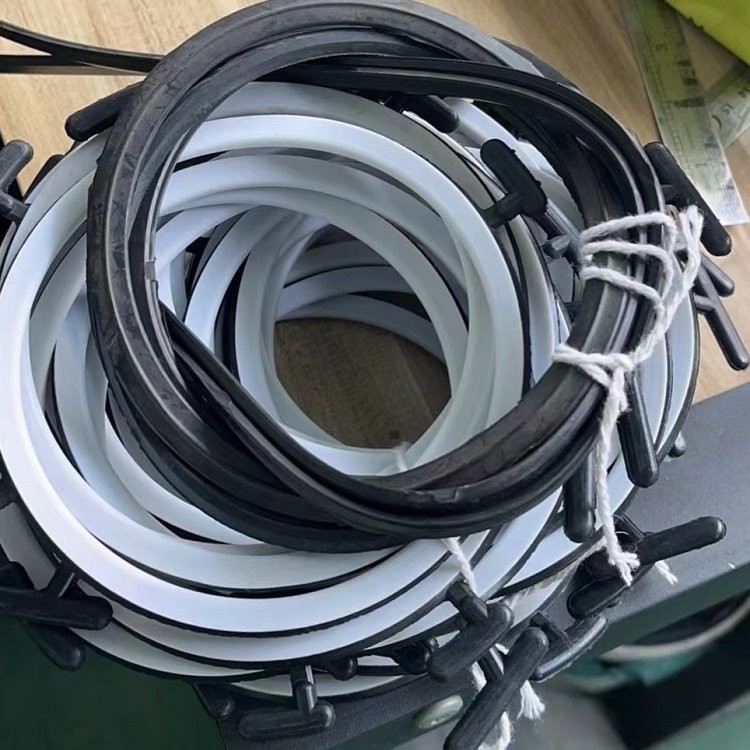
The heat exchanger is an important component of the plate heat exchanger. During assembly, adhesive is used to firmly attach the gasket to the sealing groove of the plate, and the gasket is placed in the circumferential groove of the hole according to the needs of fluid flow, thereby ensuring or preventing fluid from entering the channel between the plates and achieving the purpose of heat exchange.

The NBR gasket for heat exchangers is a widely used sealing material in various heat exchanger equipment. This sealing gasket has excellent oil resistance, high temperature resistance, weather resistance, and chemical corrosion resistance, thus effectively protecting the heat exchanger equipment and improving its performance and lifespan.

The sealing gasket of a plate heat exchanger is an important component of the plate heat exchanger, used to seal the gap between the heat exchange plates and ensure that the heat exchange medium does not leak.
Advantages of Plate Heat Exchanger Gasket
Effective Sealing
Gaskets create a tight seal between plates, preventing leaks and ensuring that fluids flow through designated channels, maximizing heat transfer efficiency.
Improved Heat Transfer
By maintaining optimal fluid flow and minimizing bypass, gaskets help enhance the overall heat transfer performance of the exchanger.
Temperature and Pressure Resistance
Gaskets are designed to withstand high temperatures and pressures, making them suitable for various industrial applications.
Material Versatility
Available in different materials (such as rubber, elastomers, and PTFE), allowing customization based on the specific needs of the application, including chemical compatibility.
Ease of Maintenance
Gaskets simplify the maintenance and replacement process. They are easy to install and remove, which helps reduce downtime during repairs.
Corrosion Resistance
Many gaskets are resistant to corrosive substances, extending the lifespan of the heat exchanger and minimizing maintenance costs.
Vibration Dampening
Gaskets can absorb vibrations from equipment operation, reducing stress on the heat exchanger components and improving durability.
Reduced Fouling
Proper sealing helps minimize fouling and scaling on the heat exchanger surfaces, leading to improved efficiency and reduced cleaning needs.
Direct adhesion type
After applying sealant to the sealing gasket, directly adhere it to the installation groove of the heat exchange plate. This sealing gasket is suitable for small, low pressure plate heat exchangers.
Glue nail inlay type
Assembly holes are designed on the heat exchange plate, and glue nails are designed on the edge of the sealing gasket. After placing the sealing gasket into the installation slot, the glue nails are embedded in the assembly holes. This type of sealing gasket has a complex structure, but it is relatively easy to install and disassemble.
Buckling type
A buckle is designed on the edge of the sealing gasket, and the sealing gasket is fastened onto the heat exchange plate using the buckle. This sealing gasket is suitable for large, high-pressure plate heat exchangers.
Symmetrical and asymmetric shapes
The sealing gaskets of plate heat exchangers are divided into symmetrical and asymmetric shapes according to the product profile shape. Symmetrical shapes are generally applied to diagonal flow plates, with flat upper and lower sealing surfaces that are symmetrical along the water plane and can be installed in both directions; The asymmetric ground is flat, and the upper sealing surface can be flat, curved, inclined, etc. The performance form of the sealing gasket for plate heat exchangers varies depending on the application situation.
Material of Plate Heat Exchanger Gasket
EPDM (Ethylene Propylene Diene Monomer)
Usage: General-purpose applications, especially where resistance to heat, ozone, and weathering is required.
Applications: Hot water, steam, and cooling water systems. Suitable for use with lye, seawater, air, and brine.
Temperature Range: Typically -30°C to 165°C.
NBR (Nitrile Butadiene Rubber)
Usage: Applications requiring resistance to oils, fuels, and other hydrocarbons.
Applications: Oil and gas industry, automotive fuel systems, and industrial applications involving contact with oils and fuels.
Temperature Range: Typically up to 140°C.
HT-EPDM (High-Temperature Ethylene Propylene Diene Monomer)
Usage: High-temperature applications where standard EPDM might not suffice.
Applications: High-temperature water and steam systems, industrial processes requiring higher thermal resistance.
Temperature Range: Up to 180°C or higher, depending on the specific formulation.
Food-Grade EPDM
Usage: Applications requiring compliance with food safety standards.
Applications: Food and beverage processing, dairy industry, and other applications where contact with food products is involved.
Temperature Range: Similar to standard EPDM, but formulated to meet food safety regulations.
Food-Grade NBR
Usage: Applications requiring resistance to oils and compliance with food safety standards.
Applications: Food processing equipment, dairy industry, and applications involving edible oils and fats.
Temperature Range: Similar to standard NBR, but formulated to meet food safety regulations.
HNBR (Hydrogenated Nitrile Butadiene Rubber)
Usage: Applications requiring enhanced resistance to heat, oil, and chemicals.
Applications: Automotive, oil and gas, and industrial applications where higher performance than standard NBR is required.
Temperature Range: Typically up to 150°C or higher.
Viton B (Fluoroelastomer)
Usage: Applications requiring excellent chemical resistance and high-temperature stability.
Applications: Chemical processing, aerospace, and automotive industries where exposure to aggressive chemicals and high temperatures is common.
Temperature Range: Typically -20°C to 200°C.
Viton G (Fluoroelastomer)
Usage: Similar to Viton B but with enhanced performance in specific chemical environments.
Applications: Chemical processing, oil and gas, and other industries requiring superior chemical resistance.
Temperature Range: Typically -20°C to 200°C.
Plate Heat Exchanger Gasket Aging Causes and Effects
The plate heat exchanger is composed of a fixed cover plate, a removable cover plate and a set of plates. The principle of the structure is that the plates are pressed together by means of a screw between the front and back plates, which also generates the necessary pressure on the gasket. Based on this structure of the heat exchanger, during the heat exchanger compacting process, the movable cover plate is continuously compacted towards the fixed cover plate, resulting in The plates in the vicinity of the moving cover are the first to be compressed. The greater the number of plates to be compressed, the greater the pre-stressing. Due to this structural characteristic, the number of plates also affects the service life of the heat exchanger gasket under the same operating conditions.
The use of plate heat exchanger gaskets is influenced not only by light and weather, but also by the surrounding environment. This is why heat exchangers that are placed outdoors have a different gasket life than heat exchangers that are placed indoors. In order to reduce the influence of the environment, it is very effective to use a protective cover or insulation on the outside of the plate heat exchanger.
The effect of temperature and pressure variations on the service life of a gasket should never be underestimated. In the case of a change in conditions, the stress peaks generated at various parts of the gasket have a more negative effect on the internal tissues of the material than in the long term. A constant load is even more deadly. Likewise, start-stop procedures or long downtimes can have a negative impact on gasket life. From an equipment point of view, if the process requires frequent start-stop procedures, a spring device between the tie rods and the removable cover can be installed. In order to reduce the effect of temperature load changes on the gasket.
The medium flowing through the plate heat exchanger has the greatest influence on the life of the gasket. The selection of a suitable gasket cannot always be perfect when considering the fluid substance and operating conditions. The mixing of cooling and heating additives, inhibitors, and other substances that tend to penetrate into the gasket and thereby Caused to the destruction of its physical properties.
Signs of Plate Heat Exchanger Gasket Failure
Monitoring the signs of plate heat exchanger gasket failure is essential to prevent costly breakdowns and ensure the safe operation of your plate heat exchanger. Some common indications of plate heat exchanger gasket failure include the presence of leaks, a decrease in efficiency, or the emergence of unusual noises. These signs serve as a warning that it's time to take action and address the issue before it escalates into a more severe problem. To minimise the risk of unexpected plate heat exchanger gasket failure, it's crucial to inspect and monitor the condition of your plate heat exchanger gaskets regularly. By staying vigilant and addressing any signs of wear or damage promptly, you can prolong the life of your plate heat exchanger gaskets and maintain the optimal performance of your plate heat exchanger. When upgrading or replacing plate heat exchanger gaskets in your plate heat exchanger, it's essential to choose the right plate heat exchanger gasket for heat exchanger to ensure optimal performance and longevity.
Understanding the factors that influence plate heat exchanger gasket lifespan is crucial for optimising the performance and longevity of your plate heat exchanger. The material composition of the plate heat exchanger gasket plays a significant role in determining its resistance to temperature and pressure fluctuations. For example, some materials may be more resilient to extreme conditions than others, thus lasting longer in certain applications. Another critical factor affecting plate heat exchanger gasket lifespan is the selection of cleaning agents. Using the wrong cleaning agent can lead to corrosion, which will ultimately cause the plate heat exchanger gasket to fail prematurely. It's essential to choose cleaning agents that are compatible with both the plate heat exchanger gasket material and the process media to ensure the best possible performance and service life. It's important to schedule regular plate heat exchanger cleaning to keep on top of any issues.
How to Choose Plate Heat Exchanger Gaskets
Media compatibility
The gasket material must be compatible with the fluids exchanged in the heat exchanger. For example, nitrile rubber gaskets are commonly used for water and oil applications, while EPDM rubber gaskets are widely used for steam and chemical applications.
Temperature and pressure rating
The gasket material must withstand the temperature and pressure of the exchanged fluids. Some gasket materials have a lower temperature or pressure rating than others.
Plate heat exchanger type
Plate heat exchangers come in various types, each with its unique design. It is essential to choose gaskets that are compatible with the kind of plate heat exchanger being used.
Tips for Prolonging Plate Heat Exchanger Gasket Lifespan
Proper installation
As we've discussed earlier, proper installation is vital for extending the life of your gaskets. From cleaning the flanges to lubricating bolts and nuts, each step in the installation process plays a crucial role in ensuring the gasket's effectiveness and longevity. By following the manufacturer's guidelines and using the appropriate tools and techniques, you can maximise the lifespan of your gaskets and maintain the optimal performance of your plate heat exchanger. Remember, proper installation is the foundation of gasket longevity.
Regular maintenance
In addition to proper installation, regular maintenance is essential for prolonging the life of your gaskets. This includes assessing signs of wear and tear, inspecting the gasket for any damage, and replacing the gasket as necessary. Moreover, cleaning your plate heat exchanger is a crucial aspect of regular maintenance. Mechanical and chemical cleaning methods can help to remove deposits and prevent corrosion. By implementing a consistent maintenance routine, you can extend the lifespan of your gaskets and keep your plate heat exchanger operating at peak performance.
Monitoring operating conditions
Lastly, monitoring the operating conditions of your plate heat exchanger is essential for extending the life of your gaskets. By regularly observing and measuring parameters such as temperature, flow rate, and pressure loss, you can identify any changes that could signify an issue or potential failure. Being proactive in monitoring operating conditions and addressing any concerns promptly will help to ensure that your gaskets remain in top condition for as long as possible. Remember, the key to gasket longevity lies in a combination of proper installation, regular maintenance, and vigilant monitoring.
Installation and Tightening of Plate Heat Exchanger Gasket
Surface Preparation: Cleanliness is Key
Before installing a gasket, it's imperative to ensure that the sealing surfaces are clean and free from any debris, old gasket material, or contaminants. Any imperfections on the surface can lead to uneven pressure distribution and potential leakage.
Applying Uniform Pressure
During the installation process, apply uniform pressure across the gasket. This ensures that the gasket compresses evenly, creating a consistent seal. Avoid applying excessive force, as this can lead to gasket deformation and, ultimately, leaks.
Avoiding Over-Tightening
Over-tightening can have detrimental effects on the performance of a gasket. It may cause the gasket to deform, compromise its integrity, and potentially lead to leaks. Following manufacturer-recommended torque specifications and using calibrated tools for tightening are crucial steps in preventing over-tightening.
Regular Inspection Post-Installation
After installation, it's advisable to conduct a thorough visual inspection to confirm that the gasket is seated properly and that there are no visible signs of misalignment or deformation.
Periodic Retightening (if applicable)
In certain applications, especially those involving thermal cycling or significant pressure fluctuations, periodic retightening may be necessary to maintain the integrity of the seal. This practice helps compensate for any relaxation of the gasket material over time.
Nantong Hi-eff Heat Exchange Equipment Co., Ltd. is a leading supplier of heat exchangers and their plates and gasket spare parts. Our company is located in Jiangsu Province and was established in 2012. It currently has a factory covering an area of more than 3,000 square meters and provides services to customers in more than 30 countries and regions around the world. Our main products are plate and frame heat exchangers, welded plate heat exchangers, plate heat exchanger accessories, etc., which can be used in HVAC, papermaking, steel, chemical, refrigeration, electric power, shipbuilding, food and beverage and other industries.

Our Certifications


Ultimate FAQ Guide to Plate Heat Exchanger Gasket
Hot Tags: plate heat exchanger gasket, China plate heat exchanger gasket manufacturers, suppliers, factory, Phe Gasket, Swep Heat Exchanger, Welded Plate Heat Exchanger