


Why Choose Us?
Rich Experience
Our team consists of more than 30 technical personnel with more than 20 years of industry experience and has helped our products obtain more than 55 patent certificates.
Well Equipped
The company is equipped with multiple advanced mold processing CNC machine tools, special hydraulic presses, punching machines, integrated blanking machines and other equipment, and can provide customers with high-quality heat exchanger and gasket spare parts, especially GEA, Tranter, APV, AGC and other models.
Quality Assurance
We have our own quality inspection center to ensure that the production process complies with ISO standards, and conduct quality inspection of heat exchangers through hydraulic pressure testing equipment, strength testing equipment, etc. to ensure that all products comply with CE and RoHS certifications.
Customized Services
Our team is good at customized design and production, and supports OEM and ODM orders, including providing various heat exchange tubes, fins, structural parts, and pipes to meet the requirements of different use environments.
What is Epdm Rubber Seal?
EPDM, Ethylene Propylene Diene Monomer, is an "M" class synthetic rubber elastomer. EPDM seals are very popular and versatile polymer application. Because of the high-quality raw material suppliers we use, these manufactured EPDM gaskets and EPDM seals are resistant to ozone, weather and aging. EPDM seal material can be found in applications ranging from belts and hoses to complex applications such as mass transit.

Heat exchanger plates are usually made of metal materials with different shapes and sizes, used to separate hot and cold fluids and transfer heat. Therefore, you need to consider how to design the shape, size, and material of the board to meet your specific needs. The standard plate of sondex is one of the heat exchanger plates.

The specific standard board types may vary depending on the manufacturer, product series, or specific application. If you need a specific type of heat exchanger plate, it is recommended to contact the manufacturer or supplier to obtain accurate product specifications and performance data.

The LWC series semi welded plate is an efficient heat exchanger plate, which is composed of a series of metal plates with a certain corrugated shape stacked together. This type of plate heat exchanger forms thin rectangular channels between the plates for heat exchange.

The NBR gasket for heat exchangers is a widely used sealing material in various heat exchanger equipment. This sealing gasket has excellent oil resistance, high temperature resistance, weather resistance, and chemical corrosion resistance, thus effectively protecting the heat exchanger equipment and improving its performance and lifespan.
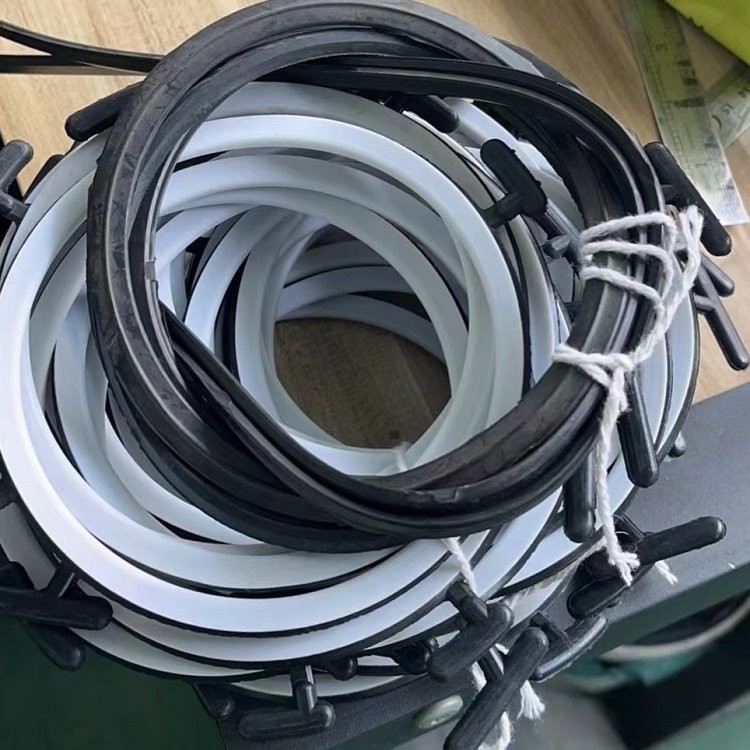
The heat exchanger is an important component of the plate heat exchanger. During assembly, adhesive is used to firmly attach the gasket to the sealing groove of the plate, and the gasket is placed in the circumferential groove of the hole according to the needs of fluid flow, thereby ensuring or preventing fluid from entering the channel between the plates and achieving the purpose of heat exchange.

1. Model: Customizable
2. Material: EPDM rubber
3. Purpose: Heat exchanger seal
4. Features: high temperature resistance, corrosion resistance, wear resistance and aging resistance

The sealing gasket of a plate heat exchanger is an important component of the plate heat exchanger, used to seal the gap between the heat exchange plates and ensure that the heat exchange medium does not leak.
1. Weather Resistant
An EPDM rubber seal will be resistant to ozone and UV light, which is one of the biggest advantages of this type of seal over other materials. This is why many companies choose this material over natural rubber, which will crack and degrade when used in these conditions for a long period of time. You can't use natural rubber in direct sunlight, or you will find it becomes ineffective and unable to do its job. EPDM rubber rubber seals are ideal for working outdoors, as they can be exposed to these weather conditions for an extended period of time without harm. You can also use these rubber seals with water at various temperatures, meaning a rubber seal EPDM is a very versatile option.
2. Heat-Resistant
Any sealing product you purchase should be able to work for your unique needs, and many of our clients find that they need a rubber seal that can work at a very high temperature. EPDM is the ideal option for high temperatures, allowing you to work at up to 300 degrees Fahrenheit effectively. It can also be used as an effective seal at low temperatures, so you could use it in the freezing cold winter if needed. This is why this material is used in roof seams, as it seals off a building from the cold outside weather. You won't have to worry about changing the rubber seals you are using to fit different temperature requirements when you work with EPDM rubber seals, as they can be effective all year round and in a variety of conditions.
3. Chemical Resistance
When you purchase rubber seals, you might be expecting to use them with various chemicals. Chemicals all have different properties, which means that each chemical needs to be tested with rubber seals before you can use them regularly. EPDM is resistant to many different elements, including sodium, nitrogen and potassium. This material has been thoroughly tested, so you can rest assured knowing that you can carry out work with mild acids, alkalis, alcohol and detergents with no issues. Just keep in mind that EPDM might not be suitable for use with natural gas and oils, due to its composition.
Epdm Rubber Seal Material Types and Grades
Solid, Sponge, and Foam Rubber EPDM Seals
Solid EPDM seals and sponge rubber EPDM seals are available in a range of durometers. Foam rubber EPDM is characterized by closed cells or open cells. Custom EPDM seals made of closed cell sponge rubber are used in HVAC systems, electrical enclosures, and door and window seals on cars. Die cut EPDM seals made of open cell sponge rubber are used in applications such as shock absorption and electrical insulation.
Commercial vs. Higher Grade EPDM Seal Materials
Die cut seals made of commercial-grade EPDM provide good resistance to chemicals, ozone, weathering, and UV light. Typically, these EPDM seals are used in applications that require resistance to hot and cold water, saturated steam, and outdoor environments. Higher-grade EPDM materials offer enhanced properties, and may be recommended if a lower compression set is required.
UL 94 EPDM Rubber Seals
UL 94, an Underwriters Laboratories (UL) standard for flame resistance and fire safety, is also used with EPDM materials. UL 94 seals that are made of flame-retardant EPDM rubber meet UL burn tests such as V-0, V-1, and V-2 and are often halogen-free. Custom die cut seals made of UL-rated EPDM sponge rubber and EPDM foam rubber also provide good sealing and moderate-to-good cushioning.
Peroxide Cure and FDA Approved EPDM Seals
Die cut seals that are made of peroxide-cured EPDM rubber provide excellent resistance to aging, heat, and compression set. Typically, they're used in applications with food, water, and/or steam. FDA-approved EPDM seals meet U.S. Food and Drug Administration (FDA) requirements for food contact applications and medical devices. Not all food-grade rubber seals are FDA-approved, however.
Application of Epdm Rubber Seal
Automotive Industry
EPDM rubber seals are widely used in automotive applications, including door seals, window seals, and rubber seals for engine components, thanks to their resilience and resistance to automotive fluids.
HVAC Systems
EPDM rubber seals are employed in heating, ventilation, and air conditioning (HVAC) systems for sealing ductwork, HVAC units, and refrigeration equipment due to their thermal stability and weather resistance.
Electrical Enclosures
EPDM rubber rubber seals are utilized in electrical enclosures and switchgear to provide a weatherproof seal, protecting sensitive electrical components from moisture, dust, and contaminants.
Plumbing and Pipeline Sealing
EPDM rubber seals are commonly used in plumbing fittings, valves, and pipelines to create watertight seals, preventing leaks and ensuring efficient fluid conveyance.
Construction and Building Materials
EPDM rubber rubber seals find applications in construction and building materials, such as window seals, roofing membranes, and expansion joints, due to their durability, weather resistance, and thermal stability.
Industrial Machinery
EPDM rubber seals are employed in various industrial machinery and equipment, including pumps, compressors, and hydraulic systems, to provide sealing solutions that withstand demanding operating conditions.
Key Considerations When Using EPDM Rubber Gaskets
1. Material Properties
The durometer or hardness of EPDM gaskets is essential when selecting the appropriate product for your application. A softer gasket can conform to irregular surfaces and provide a better seal. Conversely, a harder rubber gasket can resist deformation and maintain a reliable seal under pressure. Another important property to consider is the compression set. EPDM has a low compression set, which allows the gaskets to maintain their original shape and form, providing a reliable and consistent seal. This is paramount for sealing applications requiring long-lasting seals, such as automotive or construction industries.
2. Temperature Range
EPDM gaskets are well-suited for use in environments with extreme temperatures because they resist such conditions remarkably. Their capacity to withstand temperatures from -50 to 150 °C enables them to be used in various industries. However, it is worth noting that the temperature range that a specific EPDM gasket can tolerate depends on its formulation and application.
3. Chemical Compatibility
When selecting an EPDM gasket, it is crucial to consider the compatibility of the material with the chemical it will come into contact with. Although they are known for their excellent chemical resistance, exposure to certain substances can cause the rubber to degrade or break down. This can lead to failure in the product's sealing capabilities. Examples of chemicals they may not be compatible with include petroleum-based oils and fuels, aromatic solvents, and certain halogenated hydrocarbons.
4. Pressure Rating
The pressure rating is the maximum pressure the gasket can withstand without deforming or failing. This can vary depending on the size and shape of the rubber and its intended application. As for EPDM, they are available in a range of pressure ratings, from low-pressure to high-pressure applications. Hence, selecting a type with a pressure rating exceeding the maximum pressure of exposure is crucial.
5. Surface Preparation
Before installing an EPDM gasket, it is essential to ensure that the surfaces that the gasket will be in contact with are clean and free from any contaminants. This is because contaminants - such as dust, dirt, and grease - can prevent the gasket from forming an effective seal, leading to leaks and other issues. Surface preparation requires a thorough cleaning using an appropriate product or solution. This solution will depend on the type of surface and the nature of the contaminants present. For example, a solvent-based cleaner may be suitable for removing oil from metal surfaces, while a mild soap solution is appropriate for cleaning plastic surfaces.
EPDM is an acronym for ethylene-propylene diene monomer. Ethylene and propylene are hydrocarbons and gases at room temperature, yet combine to make solid polymers like polyethylene and polypropylene. By adjusting the proportions and controlling the polymerization process it's possible to create long molecular chains with more rubbery properties. That's EPDM.
Sometimes referred to just as EPM, EPDM is a very stable material that resists heat, oxidation, and the aging effects of ultraviolet light. Unlike many other elastomers it's flexible at low temperatures, and depending on how it's formulated, works over a range of -60°F to 300°F.
EPDM has good mechanical properties too. Tensile strength is in the range of 7 to 21 Mpa, which is higher than other elastomers like silicone (5 – 10 MPa), nitrile (12 – 15 MPa) and neoprene (5 – 8 MPa). It's also resistant to abrasive wear, which can't be said for silicone.
In terms of chemical resistance, EPDM holds up well to acids and alkalies and is a good choice when dealing with both brake fluids and ketones. It also has good resistance to steam. Where it fares less well is against hydrocarbon oils and petroleum products as these produce swelling.
Temperature
Temperature resistance is critical in applications that subject components to wide temperature ranges. Think ovens. At high temperatures you do not want your rubber seal to melt, deform or become brittle with cold, either extreme could cause it to fail during operation with potentially disastrous results for the equipment and its output.
EPDM should be used if your application between -40°C to 121°C (250°F).
Silicone should be used if your application between -40°C to 200°C (392°F) some formulations can go to 270°C (518°F).
Elongation/Tear Resistance
Different applications will require hardness/stiffness while others will require the product to flex and stretch to accommodate changing conditions. You'll want to consider how much a seal or gasket should be able to indent and change shape under operational conditions in order to avoid failure.
Silicone stretches more than EPDM and can elongate up to 800% and has a high tear resistance.
As a result it is used as vacuum membranes and presses that help form and bond composites under extreme pressure.
Oil resistance
Both materials tend to swell if exposed to oil for long periods. However silicone has a better resistance to oil and so is preferred if oil exposure is an issue e.g. in auto engines or marine engine rooms.
Environmental
If the seal/component is to be outdoors its environmental resistance will be important. Some rubbers will crack when continuously exposed to ozone and UV which will impact performance. Both EPDM and Silicone have excellent resistance to weather, ozone and UV although EPDM is better for water resistance
Tear Strength
Tear strength can be important when the component is subjected to flex forces that could make it split or tear. EPDM has good tear strength and is more durable than silicone. However, the flip side of that is that silicone is more flexible and can also manufactured to have higher levels of tear resistance and elongation
Key Characteristics of Epdm Rubber Seals
1. Weather Resistance
EPDM exhibits outstanding resistance to weathering, ozone, and ultraviolet (UV) radiation. This makes it an ideal choice for outdoor applications where exposure to the elements is inevitable. EPDM maintains its integrity and flexibility over a wide temperature range, ensuring long-term performance even in harsh climates.
2. Chemical Resistance
EPDM rubber has excellent resistance to a wide range of chemicals, acids, and alkalis. This chemical stability makes it suitable for use in industries where exposure to diverse chemical substances is common, such as the automotive, chemical processing, and petrochemical industries.
3. Temperature Stability
EPDM maintains its flexibility and mechanical properties across a broad temperature spectrum, from -40°C to 120°C (-40°F to 248°F). This thermal stability allows EPDM seals and seals to function reliably in both hot and cold environments without compromising their sealing performance.
4. Electrical Insulation
EPDM is an effective electrical insulator, making it suitable for applications where electrical conductivity is a concern. This property enhances its utility in electrical enclosures, outdoor electrical components, and various electronic devices.
5. Compression Set Resistance
EPDM rubber exhibits excellent resistance to compression set, meaning it can rebound to its original shape after being compressed. This characteristic ensures a tight and effective seal, even after prolonged periods of compression or deformation.
6. Tensile Strength and Tear Resistance
EPDM rubber possesses high tensile strength and tear resistance, contributing to its durability and longevity in service. These mechanical properties make EPDM seals and seals capable of withstanding significant mechanical stress and deformation.
7. Water and Steam Resistance
EPDM has low water absorption, and it resists the deteriorating effects of steam. This makes EPDM seals and seals suitable for applications involving water exposure and steam, such as in plumbing, HVAC systems, and steam pipelines.
Nantong Hi-eff Heat Exchange Equipment Co., Ltd. is a leading supplier of heat exchangers and their plates and gasket spare parts. Our company is located in Jiangsu Province and was established in 2012. It currently has a factory covering an area of more than 3,000 square meters and provides services to customers in more than 30 countries and regions around the world. Our main products are plate and frame heat exchangers, welded plate heat exchangers, plate heat exchanger accessories, etc., which can be used in HVAC, papermaking, steel, chemical, refrigeration, electric power, shipbuilding, food and beverage and other industries.

Our Certifications


Ultimate FAQ Guide to Epdm Rubber Seal
Hot Tags: epdm rubber seal, China epdm rubber seal manufacturers, suppliers, factory, Alfa Laval Semi Welded Plate Heat Exchanger, Kelvion LWC150L Heat Exchanger, Welded Plate Heat Exchanger, Alfa Laval Brazed Plate Heat Exchanger