

Nantong Hi-eff Heat Exchange Equipment Co., Ltd. is a leading supplier of heat exchangers and their plates and gasket spare parts. Our main products are plate and frame heat exchangers, welded plate heat exchangers, plate heat exchanger accessories, etc.


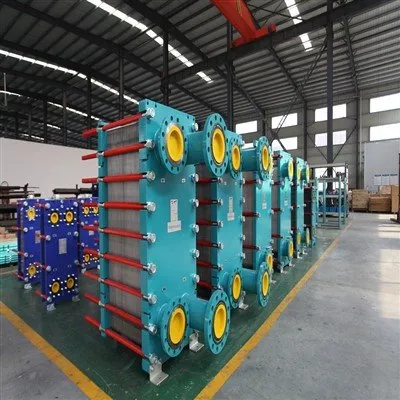
Why choose us
Rich experience
Our team consists of more than 30 technical personnel with more than 20 years of industry experience and has helped our products obtain more than 55 patent certificates.
Accept ODM
Our team is good at customized design and production, and supports OEM and ODM orders, including providing various heat exchange tubes, fins, structural parts, and pipes to meet the requirements of different use environments.
Well equipped
The company is equipped with multiple advanced mold processing CNC machine tools, special hydraulic presses, punching machines, integrated blanking machines and other equipment, and can provide customers with high-quality heat exchanger and gasket spare parts, especially GEA, Tranter, APV, AGC and other models.
Quality assurance
We have our own quality inspection center to ensure that the production process complies with ISO standards, and conduct quality inspection of heat exchangers through hydraulic pressure testing equipment, strength testing equipment, etc. to ensure that all products comply with CE and RoHS certifications.

Enhanced reliability
The welded plates ensure a leak-proof barrier for corrosive or high-pressure fluids, minimizing the risk of contamination and maximizing uptime. Meanwhile, the gasketed plates enable quick and hassle-free maintenance, reducing downtime and operational costs.
High heat transfer efficiency
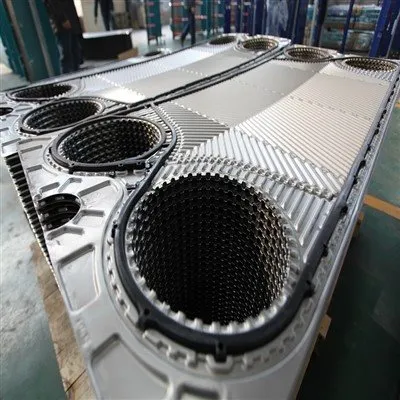
The corrugated design of the plates maximizes turbulence in the fluid flow, promoting efficient heat transfer between the two streams. This results in optimized performance and reduced energy consumption.
Compact solution
Like gasketed plate heat exchangers, semi-welded designs offer a high surface area-to-volume ratio, allowing for efficient heat transfer in a compact footprint, making them ideal for installations with limited space.
Versatility
In addition to their reliability, semi-welded plate heat exchangers offer unmatched versatility. They are suitable for a wide range of applications across industries such as hvac, chemical processing, refrigeration, and more. Whether you need to cool, heat, or condense fluids, semi-welded heat exchangers provide a flexible and efficient solution.
Easy maintenance
While some plates are welded for durability, the presence of gasketed plates allows for easy access and maintenance of the heat exchanger, minimizing downtime and facilitating cleaning and inspection procedures.
Industrial refrigeration: Evaporators (flooded evaporation or direct expansion evaporation), condensers, liquid coolers, chillers, subcooling, desuperheating of hot gas, heat recovery systems and cascade systems.
Chemicals (such as sulphuric acid/ethylene oxide/ethylene glycol production): Heat management in reaction processes, cooling systems, condensers, evaporators, heat recovery systems, process heating, waste heat recovery systems.
Hydrogen: Heat management in production, liquid and gas coolers, compressor coolers, heat recovery systems, cryogenic systems


Industrial heat pumps: Evaporators, condensers, heat recovery systems, subcooling, superheating.
Energy storage:Long-duration energy storage (LDES): preheaters, condensers.
Organic rankine cycle (ORC): Recuperators, preheaters, condensers, subcooling.
Other applications: Energy and utilities/Food, dairy and beverages/Marine and transportation/Mining, minerals and pigments/Water and waste treatment
Semi welded heat exchanger contruction
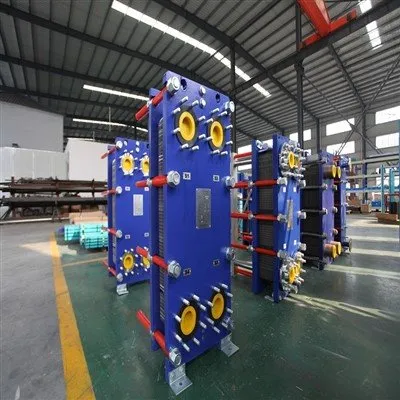
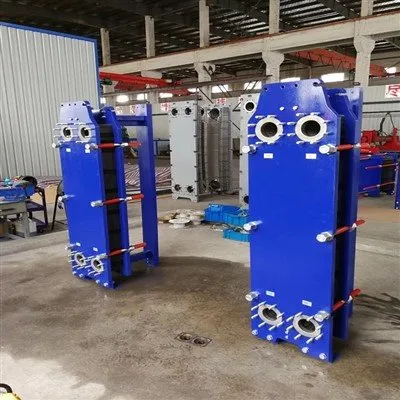
A plate heat exchanger consists of a pack of corrugated metal plates. Each plate is fitted with a rubber gasket, which seals the channel formed between two adjacent plates.
In an alternative design, every second gasket is replaced by a laser-weld to allow for fluids aggressive to the gaskets. The plate pack is assembled between a fixed frame plate and a movable pressure plate and compressed by tightening bolts.
The frame plate and the pressure plate are suspended from an upper carrying bar and guided by a lower guiding bar, both of which are fixed to a support column.
The size of the unit and the material and number of plates are determined by the requirements of the particular application and duty.
Each individual plate heat exchanger is optimised for its duty and, as a result, the usage of materials is kept to a minimum.
Our company has advanced machines and skilled workers, which can meet the needs of various enterprises

Certification


FAQ
As one of the leading semi-welded plate heat exchangers manufacturers and suppliers in China, we warmly welcome you to buy high-grade semi-welded plate heat exchangers for sale here from our factory. All equipment are with high quality and competitive price. For quotation, contact us now.
Alfa Laval Gasketed Plate Heat Exchanger, Kelvion LWC150L Heat Exchanger, Alfa Laval Semi Welded Plate Heat Exchanger