

Nantong Hi-eff Heat Exchange Equipment Co., Ltd. is a leading supplier of heat exchangers and their plates and gasket spare parts. Our main products are plate and frame heat exchangers, welded plate heat exchangers, plate heat exchanger accessories, etc.




Why choose us
Rich experience
Our team consists of more than 30 technical personnel with more than 20 years of industry experience and has helped our products obtain more than 55 patent certificates.
Accept ODM
Our team is good at customized design and production, and supports OEM and ODM orders, including providing various heat exchange tubes, fins, structural parts, and pipes to meet the requirements of different use environments.
Well equipped
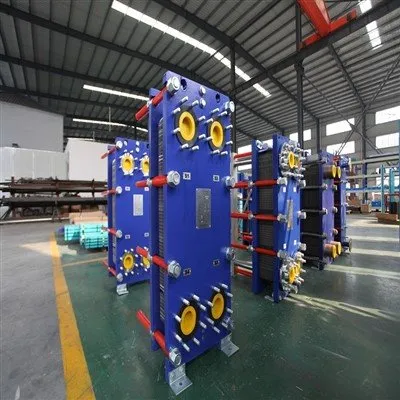
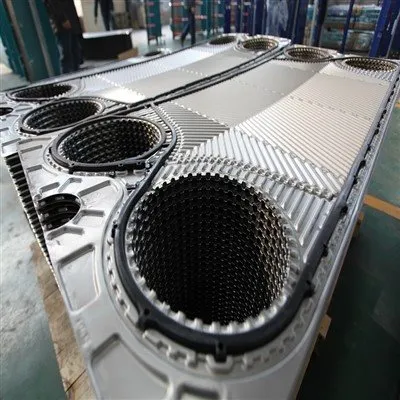
The company is equipped with multiple advanced mold processing CNC machine tools, special hydraulic presses, punching machines, integrated blanking machines and other equipment, and can provide customers with high-quality heat exchanger and gasket spare parts, especially GEA, Tranter, APV, AGC and other models.
Quality assurance
We have our own quality inspection center to ensure that the production process complies with ISO standards, and conduct quality inspection of heat exchangers through hydraulic pressure testing equipment, strength testing equipment, etc. to ensure that all products comply with CE and RoHS certifications.
|
Material |
SS |
|
Usage/Application |
Cooler |
|
Max Output Flow Rate |
50-100 m3/hr |
|
Medium Used |
Water |
|
Primary Exchanger Material |
Steel |
|
Plate Heat Exchanger Type |
Gasketed Plate and Frame |
|
Design Pressure |
4.5 MPa |
|
Working Temperature |
350 Degree C |
|
Connection Size |
50A |
|
Max Heat Transfer Area |
700 m2/unit |
|
Max Working Pressure |
3.5 [MPaG] |
Advantages of Plate-and-frame Heat Exchangers
Heat transfer precision
Improved temperature approach, true counter-current flow, 80-90% less hold-up volume.
01
Low cost
Low capital investment, installation costs, limited maintenance and operating costs.
02
Greatest reliability
Less fouling, stress, wear, and corrosion.
03
Responsible
Least energy consumption for most process effect, reduced cleaning.
04
Easy to expand capacity
Adjustable plates on existing frames.
05
Type of Plate and Frame Heat Exchangers
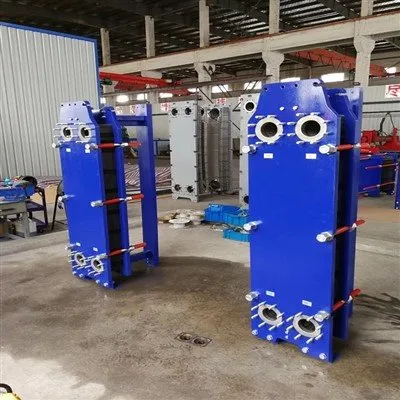
Gasketed plate heat exchangers
Use elastomeric gaskets to seal the plates together.
Welded plate heat exchangers:
The plates are welded together to form a sealed unit.
Brazed plate heat exchangers
The plates are bonded together with a brazing alloy to form a sealed unit.
Chemical Processing
In chemical processing, PFHEs are used for heating, cooling, and condensing chemical mixtures. They can handle corrosive fluids and high temperatures, making them suitable for various chemical reactions and processes.
Food and Beverage Industry
PFHEs are extensively used in the food and beverage industry for pasteurization, sterilization, and cooling of products. Their hygienic design, ease of cleaning, and precise temperature control make them ideal for handling food products.
HVAC Systems
In HVAC systems, PFHEs transfer heat between air and water or refrigerant, providing efficient heating and cooling solutions. They are used in heat recovery systems, air conditioning units, and district heating and cooling systems.


Pharmaceuticals
The pharmaceutical industry uses PFHEs for maintaining precise temperatures during processes like fermentation, crystallization, and purification. The ability to maintain sterile conditions and the easy cleaning of plates make PFHEs suitable for pharmaceutical applications.
Power Generation
In power plants, PFHEs are used for heat recovery, cooling, and condensing. They help improve the efficiency of power generation processes by transferring heat from one medium to another, often using waste heat for energy recovery.
Marine Applications
PFHEs are used in marine applications for cooling engines, lubricating oil, and other fluids. Their compact size and high efficiency make them suitable for use in confined spaces on ships and offshore platforms.
Plate Heat Exchanger Sizing
Plate heat exchangers can vary significantly in size. Available sizes range from:
9.7 x 32 x 51 mm (or 0.97 x 3.2 x 5.1 cm) at the lower end
524.4 x 112 x 24.1 mm (or 52.44 x 11.2 x 2.41 cm) at the higher capacity end
Meanwhile, transfer plate sizes run from:
100 mm x 300 mm (10 cm x 30 cm) on the smaller side
1000 mm x 2500 mm (100 x 250 cm) on the larger side
Our company has advanced machines and skilled workers, which can meet the needs of various enterprises

Certification


FAQ
As one of the leading plate-and-frame heat exchangers manufacturers and suppliers in China, we warmly welcome you to buy high-grade plate-and-frame heat exchangers for sale here from our factory. All equipment are with high quality and competitive price. For quotation, contact us now.
Standard Plates For Apv, Plate and frame Heat Exchangers