

Why Choose Us?
Rich Experience
Our team consists of more than 30 technical personnel with more than 20 years of industry experience and has helped our products obtain more than 55 patent certificates.
Well Equipped
The company is equipped with multiple advanced mold processing CNC machine tools, special hydraulic presses, punching machines, integrated blanking machines and other equipment, and can provide customers with high-quality heat exchanger and gasket spare parts, especially GEA, Tranter, APV, AGC and other models.
Quality Assurance
We have our own quality inspection center to ensure that the production process complies with ISO standards, and conduct quality inspection of heat exchangers through hydraulic pressure testing equipment, strength testing equipment, etc. to ensure that all products comply with CE and RoHS certifications.
Customized Services
Our team is good at customized design and production, and supports OEM and ODM orders, including providing various heat exchange tubes, fins, structural parts, and pipes to meet the requirements of different use environments.
What is Heat Exchanger Gasket?
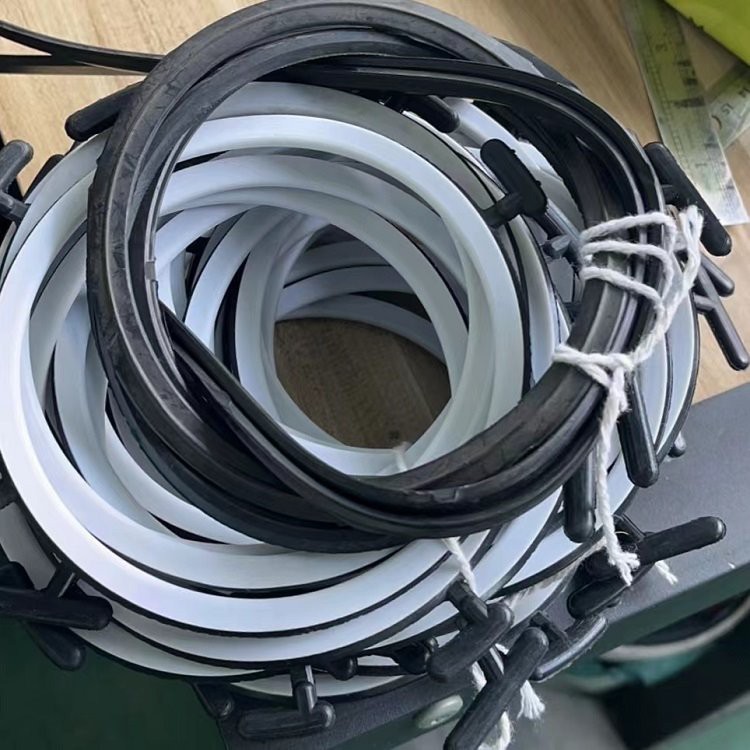
Heat exchanger gasket is a term used for gaskets in shell and tube type heat exchangers. This is usually a metal-jacketed gasket with a soft filler for higher temperatures. These gaskets are often referred to as DJs, or double-jacketed gaskets. The styles, materials, and configurations are limitless. Heat exchanger gaskets are manufactured using graphite, compressed fibersheet or millboard as a soft filler,protected by an outer double jacket in various metals such as soft iron, copper or stainless steel. These gaskets can be made with integral or welded pass bars.

Heat exchanger plates are usually made of metal materials with different shapes and sizes, used to separate hot and cold fluids and transfer heat. Therefore, you need to consider how to design the shape, size, and material of the board to meet your specific needs. The standard plate of sondex is one of the heat exchanger plates.

The specific standard board types may vary depending on the manufacturer, product series, or specific application. If you need a specific type of heat exchanger plate, it is recommended to contact the manufacturer or supplier to obtain accurate product specifications and performance data.

The LWC series semi welded plate is an efficient heat exchanger plate, which is composed of a series of metal plates with a certain corrugated shape stacked together. This type of plate heat exchanger forms thin rectangular channels between the plates for heat exchange.

Model: Customizable
Material: EPDM rubber
Purpose: Heat exchanger seal
Features: high temperature resistance, corrosion resistance, wear resistance and aging resistance

The NBR gasket for heat exchangers is a widely used sealing material in various heat exchanger equipment. This sealing gasket has excellent oil resistance, high temperature resistance, weather resistance, and chemical corrosion resistance, thus effectively protecting the heat exchanger equipment and improving its performance and lifespan.

The heat exchanger is an important component of the plate heat exchanger. During assembly, adhesive is used to firmly attach the gasket to the sealing groove of the plate, and the gasket is placed in the circumferential groove of the hole according to the needs of fluid flow, thereby ensuring or preventing fluid from entering the channel between the plates and achieving the purpose of heat exchange.

The sealing gasket of a plate heat exchanger is an important component of the plate heat exchanger, used to seal the gap between the heat exchange plates and ensure that the heat exchange medium does not leak.
Advantages of Heat Exchanger Gasket
Leak Prevention
Gaskets create a tight seal between the heat exchanger plates or tubes, preventing fluid leakage and ensuring the efficient transfer of heat.
Temperature Resistance
Many gaskets are designed to withstand high temperatures, making them suitable for various applications, including industrial and chemical processes.
Pressure Resistance
Gaskets can handle high-pressure environments, maintaining integrity and performance under challenging conditions.
Material Versatility
Available in a range of materials (e.g., rubber, elastomers, PTFE, and metal), gaskets can be selected based on the specific requirements of the application, including chemical compatibility.
Ease of Installation and Replacement
Gaskets are typically easy to install and replace, which simplifies maintenance and reduces downtime during repairs.
Improved Efficiency
By ensuring proper sealing, gaskets help maintain optimal operating conditions, improving the overall efficiency of the heat exchanger.
Corrosion Resistance
Certain gasket materials offer resistance to corrosion, extending the lifespan of the heat exchanger and reducing maintenance costs.
Vibration Dampening
Gaskets can absorb vibrations and thermal expansion, reducing stress on the heat exchanger components and enhancing durability.
Cost-Effective
Using gaskets can be a cost-effective solution for preventing leaks and maintaining system efficiency, ultimately saving on energy costs and potential repairs.
Nitrile (NBR) Gaskets: Known for their excellent resistance to oils, fuels, and chemicals, nitrile gaskets are often used in applications where compatibility with hydrocarbons is essential. They offer good temperature resistance and are cost-effective.
EPDM Gaskets: Ethylene Propylene Diene Monomer (EPDM) gaskets have exceptional resistance to aging, weathering, and ozone exposure. They also provide excellent sealing properties against hot water and steam.
Viton® Gaskets
Made from fluoroelastomer material, Viton® gaskets exhibit excellent chemical resistance even at high temperatures. They are commonly used when dealing with aggressive fluids or extreme operating conditions.
Silicone Gasket
Silicone gaskets offer high-temperature stability along with good flexibility and electrical insulation properties. They are often preferred in food processing industries due to their FDA compliance.
PTFE (Teflon®) Gasket
PTFE gaskets provide outstanding chemical resistance across a wide range of substances while maintaining low friction characteristics.
Material of Heat Exchanger Gasket
NBR (Nitrile Butadiene Rubber)
NBR gaskets are renowned for their exceptional compatibility with both water and oil-based fluids. They are extensively utilized in plate heat exchangers across various industries, making them a reliable choice for ensuring leak-free seals. NBR is suitable for applications within a temperature range of 14°F to 230°F (-10°C to 110°C).
EPDM (Ethylene Propylene Diene Monomer)
Engineered to withstand the rigors of hot water, steam, and specific chemicals, EPDM gaskets stand out in high-temperature applications. They provide flexibility and resilience, making them a preferred choice in environments with elevated temperatures. EPDM gaskets are capable of maintaining their integrity even when exposed to temperatures ranging from 5°F to 302°F (-15°C to 150°C), ensuring reliable sealing in demanding conditions.
Viton
In settings characterized by extreme temperatures and corrosive substances, Viton gaskets shine. They exhibit remarkable resistance to harsh elements, providing longevity and reliability even in the harshest conditions. Viton gaskets are specifically designed to handle temperatures ranging from 14°F to 320°F (-10°C to 160°C), making them an ideal choice for applications where temperature fluctuations are prevalent.
As the name suggests, plate heat exchangers consist of a series of thin, corrugated plates stacked together. These plates form parallel flow channels through which the two fluids (hot and cold) flow in alternate layers. The heat from the hotter fluid gets transferred through the plate to the cooler fluid. The design allows for a large surface area over which heat can be transferred, resulting in high efficiency.
The gasket's primary function is to seal the plates together, ensuring that the fluids flow only in the intended channels without leaking or mixing. Without the gasket, maintaining a consistent and efficient flow would be a significant challenge. Furthermore, gaskets help direct the fluids into alternating plates, preventing them from short-circuiting the exchanger.
Given the demanding environment within a heat exchanger, these gaskets are made of materials that can withstand high temperatures, aggressive chemicals, and the mechanical stresses induced by fluid flow. Common materials include elastomers like nitrile rubber, EPDM, and Viton. The choice of gasket material often depends on the type of fluids being processed and the operational conditions of the heat exchanger.
The design and construction of a gasket are just as crucial as the material itself. They come in various profiles, such as clip, glued, snap, and button, tailored to specific plate designs and operational needs. The shape and thickness of a gasket also play a significant role in determining its efficiency, as it must ensure a tight seal while accommodating the expansion and contraction of the plates during temperature fluctuations.
Physical Characteristics of Plate Heat Exchanger Gasket
The physical properties of the plate heat exchanger rubber gasket mainly depend on the formula one mixing and vulcanization process (including vulcanization pressure, temperature, time, etc.). Generally, the pressure of vulcanization and molding should not be less than 9.8MPa, the temperature is 160-185 ?, and the time is 3-15min, depending on the type of rubber. In the oven, under a uniform temperature, keep the heat for a certain period of time, and finally complete the vulcanization process. The physical properties will deteriorate with increasing use time and temperature. Generally, at the recommended maximum temperature of rubber strips, the average life of continuous use is about two years. If the maximum temperature is exceeded by 10 ?, the average life span will be shortened by about half. However, short-term overtemperature has little effect. Strips with good physical properties at room temperature may become very poor under high temperature and continuous use.
Compression permanent deformation rate is an important basis for measuring the elastic recovery ability of the rubber strip material and determining the temperature limit of use. Under the allowable use temperature, the smaller the value, the better the elastic recovery performance, and the more favorable for the sealing performance and average life of the rubber gaskets. The long-term deformation rate of compressed water will increase with the increase of temperature and time, and it is related to the molecular weight of rubber, vulcanizing agent, reinforcing agent and other additives. Under the premise of certain raw rubber, it mainly depends on the type of vulcanizing agent and the optimal amount of formula. Using phenolic compound curing agent, the long-term deformation rate of compressed water is the smallest; amine compound curing agent is the worst.
When heat exchanger plate gaskets are maintained as spare parts, it is important that certain storage procedures be followed to assure that the rubber compounds making-up the gaskets do not deteriorate and the useful life of the gaskets is preserved.
1. Store in an area where the temperature does not exceed 70ºF. Ideally, the temperature should not exceed 60ºF. NEVER STORE IN AN AREA WHERE THE TEMPERATURE MAY FALL TO OR BELOW 32ºF.
2. Low humidity should be maintained in the storage area. A maximum of 70% relative humidity is recommended.
3. Store in a darkened room. Ultra-violet light must be avoided.
4. Store gasket so they are free from tension. Do not store stretched or severely bent gaskets.
5. All potential sources of Ozone, such as operating electric motors, or welding equipment, must be removed from the storage area.
6. Organic solvents, acids, etc. Must not be kept in the storage area.
7. Do not store near heating system radiators.
8. Cover or keep the gaskets in bags or boxes to minimize exposure to air circulation.
9. Properly stored gaskets (no direct light 60º-70º ) will perform like new ones.
Importance of Heat Exchanger Gaskets in Maintenance and Efficiency
Gaskets, over time, face wear and tear due to continuous exposure to high temperatures and pressures. Their degradation can result in inefficiencies, such as reduced heat transfer rates or cross-contamination of fluids.
Therefore, regular maintenance and replacement of worn-out gaskets are essential for the efficient functioning of a plate heat exchanger. The ease of replacing gaskets in plate heat exchangers, as opposed to other types, further underscores their practicality in various industries.
Beyond maintenance, selecting the appropriate gasket is pivotal. An inappropriate gasket material or design can lead to early failure, reduced heat transfer efficiency, or, in the worst case, a catastrophic breakdown of the heat exchanger.
Plate heat exchangers, with their gaskets playing a pivotal role, find application across numerous industries. Whether it's the dairy industry pasteurizing milk, the chemical industry carrying out exothermic reactions, or the HVAC industry regulating building temperatures, the plate heat exchanger gasket ensures efficiency and safety. In industries where purity is paramount, such as pharmaceuticals or food processing, the role of the gasket is even more critical. Any leakage or contamination can have severe consequences, not just from an operational standpoint but also in terms of compliance with regulatory standards.
Factors to Consider for Heat Exchanger Gaskets
Heat Exchanger Design
The complicated designs of heat exchangers can directly affect the performance of gaskets. The use of gaskets that are too wide for a heat exchanger can cause insufficient gasket stress. Too much bolt load on your heat exchanger, on the other hand, can cause excessive gasket stress.
Gasketing Assembly
Incorrect installation of the gasket in your heat exchanger may cause some serious issues. Incorrect or insufficient tightening of the bolt can result in an inaccurate torqueing procedure. If you exceed the temperature limit of your gasket, then it can cause some problems to the device. Alternatively, the nuts must run fit over the entire length of the bolt thread for better gasket assembly. Threads must also be long enough so that the nuts can reach the metal faces.
Metal Faces Condition
Several elements of flange faces must be checked when installing heat exchanger gaskets. The texture of the flange surface must be assessed so that the gasket can fill in specific areas. Flange faces must also be parallel. Bolts must be tightened properly and that their load should not rely upon to pull flanges together. Any damages or dirt on the metal faces must also be repaired or removed.
Gasket Material
Gasket material can also affect the performance of heat exchangers. Reusing old gaskets can be dangerous for your heat exchanger as their safe sealing abilities are long gone now. Any rapid deterioration of gaskets means that their materials are incompatible with the fluid found on the heat exchanger. Excessive use of jointing compounds may also cause your gaskets to extrude from the faces. Any protrusion of gaskets into the flow path of the liquid can cause turbulence in addition to flow restrictions. Erosion might also happen due to fluid exposure.
Nantong Hi-eff Heat Exchange Equipment Co., Ltd. is a leading supplier of heat exchangers and their plates and gasket spare parts. Our company is located in Jiangsu Province and was established in 2012. It currently has a factory covering an area of more than 3,000 square meters and provides services to customers in more than 30 countries and regions around the world. Our main products are plate and frame heat exchangers, welded plate heat exchangers, plate heat exchanger accessories, etc., which can be used in HVAC, papermaking, steel, chemical, refrigeration, electric power, shipbuilding, food and beverage and other industries.

Our Certifications


Ultimate FAQ Guide to Heat Exchanger Gasket
Hot Tags: heat exchanger gasket, China heat exchanger gasket manufacturers, suppliers, factory, Brazed Heat Exchanger, , Gasket Plate Heat Exchangers, Brazed Plate Type Heat Exchanger,