


Why Choose Us?
Rich Experience
Our team consists of more than 30 technical personnel with more than 20 years of industry experience and has helped our products obtain more than 55 patent certificates.
Well Equipped
The company is equipped with multiple advanced mold processing CNC machine tools, special hydraulic presses, punching machines, integrated blanking machines and other equipment, and can provide customers with high-quality heat exchanger and gasket spare parts, especially GEA, Tranter, APV, AGC and other models.
Quality Assurance
We have our own quality inspection center to ensure that the production process complies with ISO standards, and conduct quality inspection of heat exchangers through hydraulic pressure testing equipment, strength testing equipment, etc. to ensure that all products comply with CE and RoHS certifications.
Customized Services
Our team is good at customized design and production, and supports OEM and ODM orders, including providing various heat exchange tubes, fins, structural parts, and pipes to meet the requirements of different use environments.
What is NBR Gasket?
The NBR gasket for heat exchangers is a widely used sealing material in various heat exchanger equipment. This sealing gasket has excellent oil resistance, high temperature resistance, weather resistance, and chemical corrosion resistance, thus effectively protecting the heat exchanger equipment and improving its performance and lifespan.

Heat exchanger plates are usually made of metal materials with different shapes and sizes, used to separate hot and cold fluids and transfer heat. Therefore, you need to consider how to design the shape, size, and material of the board to meet your specific needs. The standard plate of sondex is one of the heat exchanger plates.

The specific standard board types may vary depending on the manufacturer, product series, or specific application. If you need a specific type of heat exchanger plate, it is recommended to contact the manufacturer or supplier to obtain accurate product specifications and performance data.

The LWC series semi welded plate is an efficient heat exchanger plate, which is composed of a series of metal plates with a certain corrugated shape stacked together. This type of plate heat exchanger forms thin rectangular channels between the plates for heat exchange.

Model: Customizable
Material: EPDM rubber
Purpose: Heat exchanger seal
Features: high temperature resistance, corrosion resistance, wear resistance and aging resistance
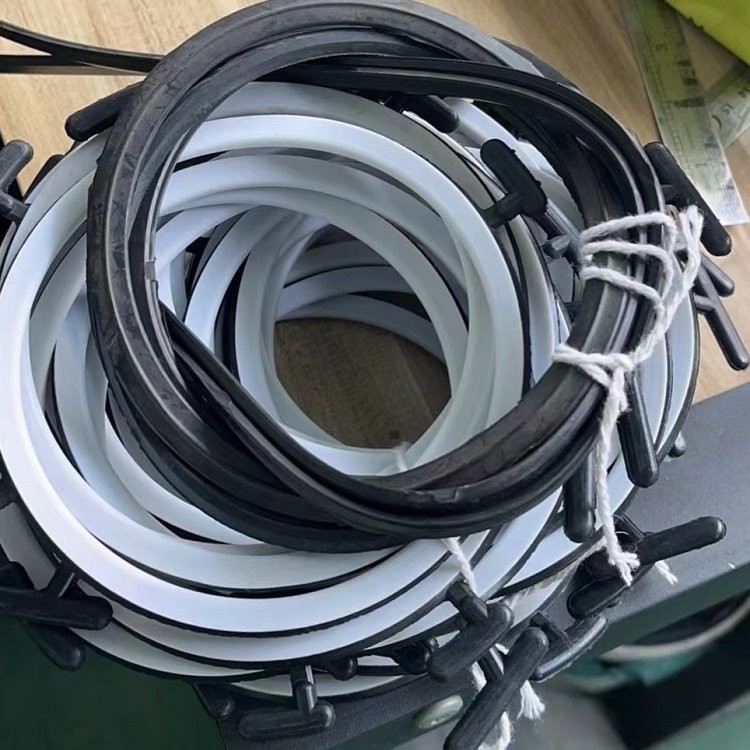
The heat exchanger is an important component of the plate heat exchanger. During assembly, adhesive is used to firmly attach the gasket to the sealing groove of the plate, and the gasket is placed in the circumferential groove of the hole according to the needs of fluid flow, thereby ensuring or preventing fluid from entering the channel between the plates and achieving the purpose of heat exchange.

The NBR gasket for heat exchangers is a widely used sealing material in various heat exchanger equipment. This sealing gasket has excellent oil resistance, high temperature resistance, weather resistance, and chemical corrosion resistance, thus effectively protecting the heat exchanger equipment and improving its performance and lifespan.

The sealing gasket of a plate heat exchanger is an important component of the plate heat exchanger, used to seal the gap between the heat exchange plates and ensure that the heat exchange medium does not leak.
Advantages of NBR Gasket
Offer High Resistance To Fuels, Oils, And Other Chemicals
NBR is one of the best material options for making gaskets that frequently come in contact with oils, fuels, and other chemicals, such as greases, acids, and solvents. NBR gasket gaskets offer much more resistance to fuels, oils, acids, grease, and other fluids than natural rubber gaskets and most other gaskets made from synthetic compounds, which is why they are often used in automotive applications and various other applications with nonstop oil exposure.
High Tensile Strength
NBR gasket has excellent tensile strength, boasting a PSI range of 200-3000 and a maximum elongation of about 600%. These capabilities mean this material is stretchable and does not lose shape and resists tearing. This is why gaskets made from NBR gasket are more durable than many other materials used for seals and other parts.
Excellent Resistance To Heat
NBR gasket can withstand temperatures ranging from -40 degrees Celsius (40 degrees Fahrenheit) up to 121 degree Celsius (250 degrees Fahrenheit). This temperature range makes NBR gasket an ideal base compound for applications that can operate in extreme temperatures and offer many other benefits. This is the reason that makes NBR gasket gaskets more suitable for applications under high temperatures.
Exceptional abrasion resistance
NBR gasket is resistant to abrasion, tears, and punctures, making it ideal for hydraulic hoses, gaskets, and any other parts that need to withstand repeated contact or regular abrasion. Therefore, NBR gasket gaskets are a good option for sealing gaps in various equipment parts that are subjected to regular abrasion.
Low permeability
NBR gasket has one of the lowest permeability rates among various synthetic elastomers, which means that gaskets made from NBR gasket seal well against many gases and liquids (including fuels, oil products, and hydrocarbons). These qualities make NBR gasket gaskets the most effective sealing solutions in many industries.
Types of NBR Gasket
Blue Nitrile Gaskets
A popular option in food and pharmaceutical processing operations due to its performance against animal fats, fish oils, greases and vegetable oils, and its highly identifiable colour can help to reduce the risk of product contamination.
White Nitrile Gaskets
This high-quality gasket material is a popular option in the food processing industry due to its performance against vegetable oils, animal fats, fish oils and greases. It is suitable for repeated use in food contact applications.
Metal Detectable Nitrile Gaskets
Metal detectable nitrile rubber gaskets are cut from a synthetic elastomer that contains additives which are visible to the majority of metal detector scanning equipment.
Material of NBR Gasket
Nitrile is highly resistant to petroleum oils, mineral oils, vegetable oils and many acids and is resistant to a broader range of aromatic hydrocarbons than neoprene. It has good elongation properties, as well as adequate resilience, tensile and compression set. These advantages make nitrile gaskets ideal for applications where resistance to oils, solvents and fuels is of critical importance, including diaphragms, hose gaskets, tubing, cups and seals for fuel and hydraulic components.
Polymer: Nitrile-Butadiene
ISO/ASTM Designations: NBR
Durometer Rating (hardness): 60
Temperature Range: -30°F to +200°F
Elongation: 350%
Tensile Strength: 1000 PSI
Finish: Plate
Widths: 36", 48"
Gauge (thickness): 1/32", 1/16", 3/32", 1/8", 3/16", 3/8", ¼", ½"
Pressure Sensitive Adhesive (PSA): available upon request
Grades: commercial, food grade, high strength
Additional Nitrile (Buna-N) Material: Yes
Application of NBR Gasket
Food Processing
The food industry depends on FDA or food-grade NBR gaskets for various processing applications to ensure compliance with health and safety standards. Silicone is a popular choice in this industry due to its excellent sealing properties and high temperature rating. Various food processing machines and equipment rely on NBR gaskets, such as cake mixers and dough mixers in industrial bakeries.
Oil & Gas
NBR gaskets resist oils, fuels, and a range of chemicals. The oil and gas industry depends on silicone materials like fluoroNBR gaskets to withstand extreme temperatures and seal oil, fuel, and coolant. Fluorosilicone resists wear and abrasion, making it suitable for static and dynamic sealing applications.
Aerospace
The aerospace industry relies on NBR gaskets to seal aircraft and space shuttle components, such as engine parts, vent ducts, door and window seals, and more. Aircraft equipment must not fail during operation, and NBR gaskets deliver the reliability necessary for the harsh conditions aircraft components face. NBR gaskets resist ozone, UV rays, and extreme temperatures, making them preferred for aircraft.
Transportation
The strength, durability, and stability of silicone rubber gaskets make them ideal for industrial, commercial, and consumer vehicles as well as buses, trains, and heavy machinery. NBR gaskets can dampen vibration and seal out external factors, providing a high-performance seal for radiators, HVAC components, interior doors, and electrical enclosures.
Medical & Healthcare
NBR gaskets are ideal for medical and healthcare applications. The material resists the growth of bacteria and repels moisture, making it suitable for sealing medical equipment and prosthetics. Silicone is biologically inert and non-toxic, and its thermal stability means it can be sterilized and stored at high temperatures. NBR gaskets also pass biocompatibility testing, meaning they can be used in various medical devices that come into contact with human skin.
Construction
Building and construction applications rely on NBR gaskets to seal doors, windows, and electrical equipment enclosures. Silicone is ideal for providing a watertight seal, and it is perfect for various outdoor construction applications due to its ability to withstand UV rays, weather, ozone, and various temperatures.
Electronics
NBR gaskets are suitable for a variety of electronic devices and equipment. They can keep water from entering the device and protect the components from heat, corrosion, and EMI.
Nitrile or NBR is a synthetic rubber with good flexibility and resilience over a temperature range of -30 to +200 °F (-34 to +93 °C). It has good strength and abrasion resistance and a low compression set, all of which make it an effective gasket material. It's also available as FDA-approved white nitrile for food industry applications.
A particular strength of nitrile is its ability to withstand attack by oils and fuels. Many gasket materials swell and break down when exposed to lubricants, hydraulic fluids or gasoline, but not nitrile. As a result, it's used extensively with engines, generators, and fuel and hydraulic systems.
It does however have some weaknesses. It's not for high-temperature applications, it doesn't have good weather resistance and it will be attacked by polar solvents.
When to NOT Choose NBR Gasket
Despite NBR gasket's many advantages, it's not the best choice for outdoor applications. A lack of UV, ozone, and weather resistance will lead to cracking.
NBR gasket is NOT weather-resistant, but luckily there are other outdoor tape options available for powerful gasketing applications. If you plan on using a NBR gasket, you'll want to keep it shielded from outside conditions.
Although NBR gasket CAN withstand temperatures up to 212°F (100°C), this is a relatively moderate range when compared to a material like silicone, which reaches up to 400-500°F (204-260°C). Generally, NBR gasket functions better in medium-high-temp gasketing applications.
Lastly, before you grab the blow torch, you should know that NBR gasket is NOT flame-resistant and is not the best choice for projects requiring flame resistance.
How can You Tell if a Gasket is Made of Buna-n (NBR)?
Gaskets made from Buna-n (NBR) have a high oil resistance (silicone oils, vegetable oils, and other oils), although adamant, and have high heat resistance. It is primarily known for its incredible oil resistance. Standard parts made from other rubber materials cannot withstand oil exposure, and nitrile rubber(NBR) leads to heavy swelling and gas permeability. This weakness can cause huge setbacks and accidents when left unchecked for an extended period. Although the physical properties can be manipulated by altering the percentage ratio for better suitability.
Seven Tips for Choosing the Right NBR Gasket
Know the application!
Every application is different, and there is no one gasket material that will successfully service all applications. Choosing the right material is critical for ensuring that a NBR gasket will not fail when placed into service and that it will continue to provide an effective seal over its expected life cycle. General application factors that should be considered when choosing a NBR gasket include the risks to be managed, whether the gasket will need to support continuous versus intermittent operation, whether the application constitutes standard or severe service, the equipment or joint being sealed, and the presence of any regulatory requirements.
Consider service temperature
Some elastomers lose strength at higher temperatures. When considering the temperature that a NBR gasket will be exposed to within an application, it is important to consider time as a key factor. What is really important is the length of time that the gasket will be exposed to the maximum temperature likely to be encountered. For this reason, the continuous maximum service temperature is a more relevant and useful parameter than just knowing the maximum temperature alone. As a general rule, as an application's temperature increases, the range of suitable gasket materials becomes more limited. More precisely, as an application's temperature approaches the maximum continuous operating temperature recommended for a given material, it will be necessary to consider an alternative material.
Consider service pressure
Pressures within an application can vary widely. Because gasket materials vary in their ability to support the pressures that may exist within an application, the maximum pressure to be serviced by a gasket must be known. As with temperature, as application pressures increase, the range of suitable materials will likely narrow. In addition, pressures may not be continuous within an application and the gasket material may be subject to pressure changes that result from process cycling. A competent gasket supplier will be able to offer guidance on the best material to choose given the range of service pressures that may exist within an application.
Media compatibility
Gasket materials also have varying resistance to the different fluids and gases with which they can come into contact within an application. Some media are relatively benign, while others, for example, are highly corrosive and may break down a gasket whose material is not able to withstand the aggressive chemical attack. It is therefore important to know the characteristics and properties of the media being sealed and to choose a gasket material that is fully compatible. Once again, competent suppliers will be able to provide guidance on the gasket materials that will best service the media present in your application.
Consider durometer and compression set
Durometer refers to how well a gasket material resists indentation. As a general rule, a NBR gasket should be soft enough to fill and seal the gap between two surfaces, but at the same time needs to be hard enough to resist loading forces and not be extruded out of the joint. Hardness of a gasket elastomer is typically measured by the Shore A scale. Gasket hardness is a relative term – what is hard enough for one application may be too soft for another, so care needs to be exercised in specifying the hardness desired.
Consider life cycle costs
Gaskets of different types and made from different materials naturally have different costs. However, the purchase cost of a gasket is only one component of the total costs incurred over the gasket's life cycle. Other costs, beyond the purchase cost, should be considered as relevant costs – including costs for installation, inspection and maintenance, downtime, and disposal. Because the purchase price is only one element in the total life cycle costs for a gasket, a gasket which is initially cheaper to buy, but which needs more frequent replacement than another, may actually be more expensive in the long run.
Work with a reputable NBR gasket supplier
Gasket fabrication requires experience, expertise, access to the best materials, and excellent manufacturing capabilities. Reputable suppliers have the knowledge and experience to help their customers choose the right gasket for their application. These suppliers fabricate their gaskets from quality materials, using proven manufacturing methods and techniques. They also carry a wide range of gasket materials, meaning that they can service most applications and ensure ready availability.
Characteristical of NBR Gasket
High Oil Resistance: One of the standout features of NBR gaskets is their excellent resistance to oils, especially petroleum-based oils. This makes them ideal for applications that involve contact with lubricants, fuels, and hydraulic fluids.
Good Temperature Range: NBR gaskets are capable of operating in a broad temperature range, typically from -40°C to 120°C. This makes them suitable for both low and high-temperature environments, providing flexibility for use in various industrial settings.
Wear and Abrasion Resistance: NBR is a tough material that offers high resistance to wear and abrasion, making it durable even in harsh operating conditions. This feature helps extend the service life of seals, reducing the need for frequent replacements.
Chemical Resistance: NBR gaskets are resistant to many chemicals, including oils, fuels, water, and some acids. This chemical resistance ensures that they maintain their integrity in aggressive environments, preventing seal degradation.
Low Compression Set: NBR gaskets maintain their elasticity over time, even after prolonged compression. This ensures they provide reliable sealing performance without significant deformation, even in applications requiring sustained pressure.
Cost-Effective Material: NBR is a relatively inexpensive material compared to other elastomers, making it a cost-effective solution for many sealing applications without compromising on performance.
Nantong Hi-eff Heat Exchange Equipment Co., Ltd. is a leading supplier of heat exchangers and their plates and gasket spare parts. Our company is located in Jiangsu Province and was established in 2012. It currently has a factory covering an area of more than 3,000 square meters and provides services to customers in more than 30 countries and regions around the world. Our main products are plate and frame heat exchangers, welded plate heat exchangers, plate heat exchanger accessories, etc., which can be used in HVAC, papermaking, steel, chemical, refrigeration, electric power, shipbuilding, food and beverage and other industries.

Our Certifications


Ultimate FAQ Guide to NBR Gasket
Hot Tags: nbr gasket, China nbr gasket manufacturers, suppliers, factory, Standard Plates For Apv, Aluminum Brazed Heat Exchanger, , Alfa Laval Brazed Plate Heat Exchanger, Brazed Plate Type Heat Exchanger