

Hey there! As a supplier of Plate Heat Exchanger Gaskets Plate Heat Exchanger Gasket, I've been getting a lot of questions about how to predict the service life of these gaskets. It's a crucial topic, especially for those who rely on plate heat exchangers in their operations. So, let's dive right in and explore the different methods for predicting the service life of a plate heat exchanger gasket.
Understanding the Basics
First off, let's understand what a plate heat exchanger gasket does. These gaskets are used to seal the plates in a heat exchanger, preventing the mixing of different fluids and ensuring efficient heat transfer. They're typically made from materials like NBR (Nitrile Butadiene Rubber) NBR Gasket, EPDM (Ethylene Propylene Diene Monomer), and Viton, each with its own set of properties and resistance to different chemicals and temperatures.
The service life of a gasket is affected by several factors, including the operating conditions (temperature, pressure, and chemical exposure), the quality of the gasket material, and the installation and maintenance practices. Predicting the service life accurately can help in planning maintenance schedules, reducing downtime, and avoiding costly replacements.
Laboratory Testing
One of the most common methods for predicting the service life of a plate heat exchanger gasket is through laboratory testing. This involves subjecting samples of the gasket material to conditions similar to those in the actual application. For example, the samples can be exposed to different temperatures, pressures, and chemicals for a specific period.
The tests can measure various properties of the gasket material, such as hardness, tensile strength, and compression set. By monitoring how these properties change over time, we can estimate how long the gasket will last in the real world. For instance, if the hardness of the gasket material increases significantly after a certain period of exposure to high temperatures, it may indicate that the gasket is becoming brittle and more likely to fail.
However, laboratory testing has its limitations. It can't fully replicate the complex and dynamic conditions in an actual heat exchanger. Also, the results may vary depending on the testing equipment and procedures used.
Field Monitoring
Another approach is field monitoring. This involves collecting data from actual plate heat exchangers in operation. Sensors can be installed to measure parameters like temperature, pressure, and leakage. By analyzing this data over time, we can identify trends and patterns that can help predict the service life of the gaskets.
For example, if we notice a gradual increase in the leakage rate over time, it could be a sign that the gasket is deteriorating. Similarly, if the pressure drop across the heat exchanger starts to increase, it may indicate that the gasket is losing its sealing ability.

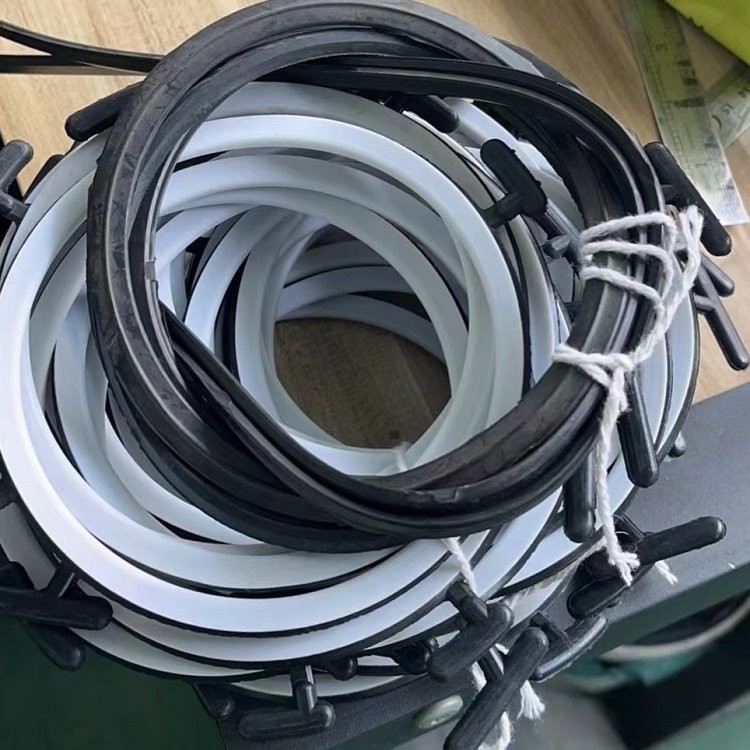
Field monitoring has the advantage of providing real - world data. But it requires a significant investment in sensors and monitoring systems. Also, it can be time - consuming to collect and analyze the data.
Statistical Analysis
Statistical analysis can also be used to predict the service life of plate heat exchanger gaskets. By collecting data from a large number of heat exchangers with similar gaskets and operating conditions, we can develop statistical models. These models can take into account factors like the age of the gasket, the number of start - stop cycles, and the average operating temperature.
For example, if we find that gaskets in a particular type of heat exchanger tend to fail after a certain number of start - stop cycles, we can use this information to predict the service life of new gaskets in similar applications. However, statistical analysis relies on having a large and representative data set. If the data is limited or inaccurate, the predictions may not be reliable.
Expert Judgment
Sometimes, expert judgment can play a crucial role in predicting the service life of a plate heat exchanger gasket. Experienced engineers and technicians who have worked with plate heat exchangers for a long time can use their knowledge and intuition to make educated guesses.
They can consider factors like the history of gasket failures in similar applications, the quality of the installation, and the overall condition of the heat exchanger. For example, if they know that a particular brand of gaskets has a reputation for long - term reliability in a certain type of chemical environment, they may give a more optimistic prediction of the service life.
But expert judgment is subjective and can vary from person to person. It also depends on the individual's experience and knowledge, which may not always be up - to - date with the latest research and technologies.
Combining Methods
In practice, the most accurate way to predict the service life of a plate heat exchanger gasket is often to combine different methods. For example, we can start with laboratory testing to get a baseline understanding of the gasket material's properties. Then, we can use field monitoring to collect real - world data and validate the laboratory results. Statistical analysis can be used to analyze the combined data and develop more accurate models. And expert judgment can be used to fill in the gaps and provide additional insights.
Importance of Accurate Prediction
Accurately predicting the service life of a plate heat exchanger gasket is crucial for several reasons. Firstly, it helps in cost - management. By knowing when a gasket is likely to fail, companies can plan for replacements in advance, avoiding emergency repairs that can be very expensive.
Secondly, it improves the reliability of the heat exchanger. A failed gasket can lead to fluid leakage, which can cause damage to other components of the heat exchanger and even to the surrounding equipment. By replacing the gasket before it fails, we can prevent these problems and ensure the smooth operation of the heat exchanger.
Finally, it reduces downtime. Unscheduled maintenance due to gasket failure can disrupt production processes, leading to lost revenue. By predicting the service life accurately, companies can schedule maintenance during planned downtime, minimizing the impact on production.
Conclusion
Predicting the service life of a plate heat exchanger gasket is a complex but important task. There are several methods available, each with its own advantages and limitations. By combining laboratory testing, field monitoring, statistical analysis, and expert judgment, we can get a more accurate prediction.
If you're in the market for high - quality Heat Exchanger Gasket or need more information about service life prediction, don't hesitate to reach out. We're here to help you make the best decisions for your heat exchanger applications. Whether you're a small business or a large industrial operation, we can provide the right gaskets and the expertise to ensure their long - term performance.
References
- "Handbook of Elastomers" by B. S. Gupta
- "Heat Exchanger Design Handbook" by William M. Kays and A. L. London
- Journal articles on elastomer degradation and heat exchanger maintenance