

EPDM rubber seals are all around us, playing a crucial role in an array of industries. If you're in the market for these seals or just curious about them, one key factor you'll definitely want to understand is their hardness. As an EPDM rubber seal supplier, I've dealt with all sorts of questions about this topic, so I'm here to break it down for you.
What is Hardness in EPDM Rubber Seals?
Hardness in rubber materials is a measure of their resistance to indentation. In simpler terms, it shows how easily the rubber can be pressed or deformed. For EPDM rubber seals, this property is super important because it affects how well the seal works in different situations.
The hardness of EPDM rubber seals is typically measured using the Shore durometer scale. There are two common types of Shore scales: Shore A and Shore D. For most EPDM rubber seals, the Shore A scale is used. It ranges from 0 to 100, where a lower number indicates a softer rubber, and a higher number means a harder one.
The Common Hardness Range
So, what's the usual hardness of EPDM rubber seals? Well, most EPDM seals you'll come across fall within the 40 to 90 Shore A range. Let's take a look at what different hardness levels in this range can offer:
40 - 50 Shore A: Soft Seals
Seals with a hardness in this range are quite soft. They're great for applications where flexibility is key. For example, they can be used in applications where the seal needs to conform to irregular surfaces. Soft EPDM seals are also good for applications where a tight seal is required with minimal clamping force. Think of gaskets in some consumer products, where you don't want to put too much pressure on the components.
50 - 70 Shore A: Medium Hardness Seals
This is probably the most common hardness range for EPDM rubber seals. Seals in this range offer a good balance between flexibility and durability. They're widely used in automotive applications, like door seals and window seals. In these cases, the seals need to be flexible enough to provide a proper seal but also tough enough to withstand constant opening and closing.
In industrial settings, medium-hardness EPDM seals are often used in Heat Exchanger Gaskets. They can handle moderate pressures and temperatures while maintaining a reliable seal.
70 - 90 Shore A: Hard Seals
Harder EPDM rubber seals are designed for applications that require high resistance to wear and tear, as well as the ability to withstand high pressures. For example, in hydraulic systems, where high pressures are involved, harder EPDM seals can prevent leakage effectively. They're also used in some manufacturing processes where the seals need to resist abrasion from machinery parts.
Factors Affecting Hardness Selection
When choosing the right hardness for EPDM rubber seals, there are several factors to consider:
Operating Conditions
The temperature, pressure, and chemical environment of the application are crucial. If the seal will be exposed to high temperatures, a harder EPDM rubber might be more suitable because it can better maintain its shape and properties. Similarly, in high-pressure applications, harder seals can prevent extrusion and leakage.
On the other hand, if the seal is going to be in contact with certain chemicals, the hardness can affect its chemical resistance. Softer rubbers might be more prone to swelling or degradation in some chemical environments.
Application Requirements
The specific requirements of the application also play a big role. For example, if the seal needs to provide a tight fit in a precision component, a softer seal might be better to ensure a perfect seal. However, if the seal needs to withstand abrasion or physical stress, a harder seal would be a better choice.
Compatibility with Other Materials
The EPDM rubber seal needs to be compatible with other materials it comes into contact with. For instance, if it's used in a Plate Heat Exchanger Gasket, it should be able to work well with the heat exchanger plates without causing any corrosion or damage.
Our Offerings as an EPDM Rubber Seal Supplier
As a supplier of EPDM rubber seals, we understand that different customers have different needs. That's why we offer a wide range of EPDM rubber seals with various hardness levels. Whether you need soft seals for a consumer product or hard seals for a high-pressure industrial application, we've got you covered.
We use high-quality EPDM materials to ensure the performance and durability of our seals. Our manufacturing processes are carefully controlled to maintain consistent hardness across all our products. And if you're not sure which hardness is right for your application, our team of experts is always here to help you make the best choice.
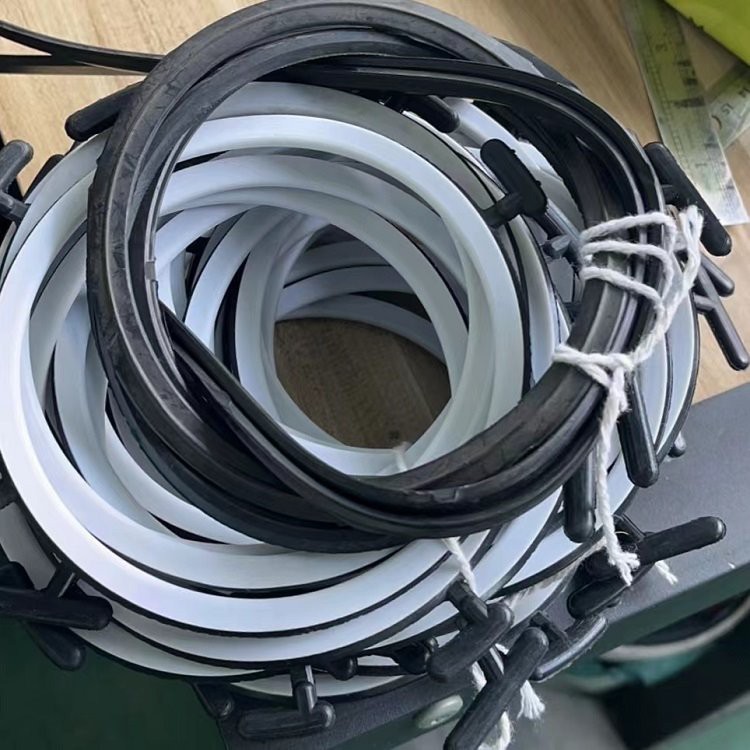

Why Choose Our EPDM Rubber Seals?
- Quality Assurance: We have strict quality control measures in place to ensure that every seal we produce meets the highest standards.
- Customization: We can customize the hardness and other properties of the EPDM rubber seals according to your specific requirements.
- Competitive Pricing: We offer our high-quality EPDM rubber seals at competitive prices, giving you the best value for your money.
- Fast Delivery: We understand the importance of timely delivery, so we strive to get your orders to you as quickly as possible.
Contact Us for Your EPDM Rubber Seal Needs
If you're in the market for EPDM rubber seals, whether it's for a small project or a large-scale industrial application, don't hesitate to reach out to us. We're here to provide you with the best products and services. You can explore our range of Heat Exchanger Gaskets and other related products on our website to see what we can offer. Let's start a conversation and find the perfect EPDM rubber seal solution for you!
References
- ASTM D2240 - Standard Test Method for Rubber Property - Durometer Hardness
- Rubber Technology Handbook, Werner Hofmann