

Hey there! As a supplier of NBR gaskets, I often get asked about the density of NBR gaskets. So, I thought I'd write this blog to share some insights on this topic.
First off, let's talk a bit about what NBR is. NBR stands for Nitrile Butadiene Rubber. It's a synthetic rubber that's known for its excellent resistance to oil, fuel, and other chemicals. That's why it's a popular choice for gaskets in a whole bunch of industries, like automotive, aerospace, and manufacturing.
Now, onto the density of NBR gaskets. Density is basically how much mass there is in a given volume. In the case of NBR gaskets, the density can vary depending on a few factors.
One of the main factors is the formulation of the NBR. Different manufacturers might use different recipes to make their NBR, which can lead to variations in density. For example, some NBR formulations might have more filler materials added to them. Fillers can be things like carbon black or silica, and they're used to improve certain properties of the rubber, like its strength or hardness. But adding more filler will generally increase the density of the NBR.
Another factor that can affect the density is the manufacturing process. The way the NBR is processed, like the temperature and pressure used during molding or extrusion, can also have an impact. If the rubber is compressed more during manufacturing, it'll be more dense.
Typically, the density of NBR gaskets ranges from about 0.95 to 1.2 grams per cubic centimeter (g/cm³). But again, this is just a general range. You might find NBR gaskets with densities outside of this range depending on the specific product.
Why does the density of an NBR gasket matter? Well, it can actually have some important implications. For one thing, density can be an indicator of the quality and performance of the gasket. A gasket with a consistent density is likely to have more uniform properties across its entire structure. This means it'll seal better and last longer.
Density can also affect the weight of the gasket. In some applications, weight is a crucial factor. For example, in the aerospace industry, every gram counts. So, a lighter NBR gasket might be preferred if it can still meet the performance requirements.
Now, let's talk about how you can measure the density of an NBR gasket. There are a few different methods. One common way is to use the Archimedes' principle. You first weigh the gasket in air, and then you weigh it again when it's submerged in a liquid (usually water). By using the difference in these weights and the density of the liquid, you can calculate the density of the gasket.
There are also more advanced methods, like using a density meter. These are specialized instruments that can give you a very accurate measurement of the density. But they're usually more expensive and might not be practical for everyone.
As a supplier of NBR gaskets, I understand that customers have different needs. That's why we offer a wide range of NBR gaskets with different densities to suit various applications. Whether you need a gasket for a Heat Exchanger Gasket, a Plate Heat Exchanger Gasket, or any other type of equipment, we've got you covered.
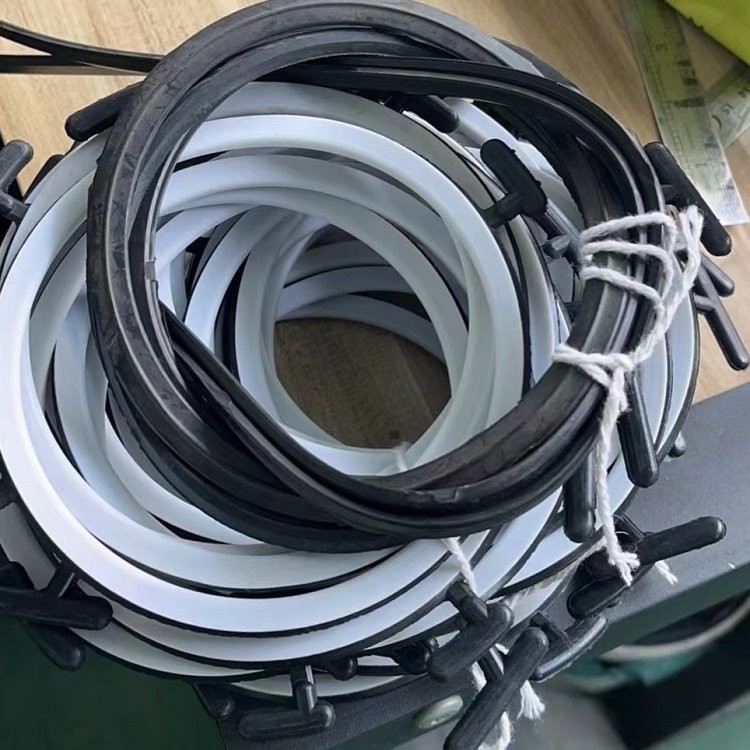

Our NBR gaskets are made with high - quality materials and strict manufacturing processes to ensure consistent density and top - notch performance. We work closely with our customers to understand their specific requirements and recommend the best gasket solution for them.
If you're in the market for NBR gaskets, don't hesitate to reach out. We're here to help you find the right product at a competitive price. Whether you need a small quantity for a prototype or a large order for mass production, we can handle it.
In conclusion, the density of NBR gaskets is an important characteristic that can impact their quality, performance, and suitability for different applications. By understanding the factors that affect density and how it matters, you can make a more informed decision when choosing an NBR gasket. So, if you have any questions or are ready to start a purchase, just get in touch, and we'll be happy to assist you.
References
- "Rubber Technology Handbook" by Werner Hofmann
- "The Science and Technology of Rubber" edited by James E. Mark, Burak Erman, and Charles L. Roth