

The tear strength of a Nitrile Butadiene Rubber (NBR) gasket is an essential mechanical property that determines the gasket's ability to resist tearing under stress. As a supplier of NBR gaskets, understanding the concept of tear strength helps in providing the best products to meet specific industrial requirements.
Understanding Tear Strength
Tear strength in materials like NBR is defined as the force required to start or continue to tear a material under specific conditions. It is expressed in units such as pounds per linear inch (pli) or newtons per meter (N/m). When it comes to NBR gaskets, tear strength plays a crucial role during installation and service.

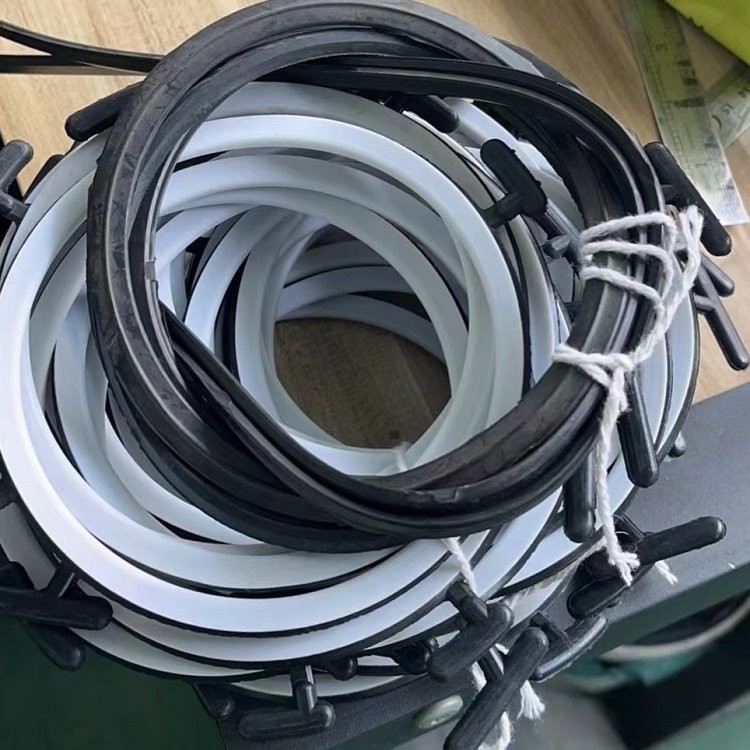
During installation, gaskets may be subjected to various types of forces. For instance, misalignment of the parts where the gasket is being installed can lead to uneven pressure distribution, potentially causing tearing. A gasket with high tear strength can withstand such accidental stress without getting damaged easily.
In service, the operating environment also poses challenges. For example, in applications where the gasket is exposed to vibration, the continuous movement can gradually cause stress concentration, which might lead to tearing over time. High - tear - strength NBR gaskets can better resist this kind of long - term stress and maintain their integrity.
Factors Affecting the Tear Strength of NBR Gaskets
- Polymer Composition: The ratio of butadiene to acrylonitrile in NBR has a significant impact on tear strength. NBR with a higher acrylonitrile content generally has better oil resistance but may have reduced tear strength compared to grades with a lower acrylonitrile content. Adjusting this ratio during the manufacturing process allows us to customize the properties of the NBR gaskets to meet specific customer needs.
- Filler Content: Fillers are often added to NBR to improve certain properties. Reinforcing fillers such as carbon black can enhance the tear strength of NBR gaskets. However, the amount and type of filler need to be carefully controlled. Excessive filler content can make the rubber compound too stiff, which may reduce its ability to deform under stress and thus lower the tear strength.
- Vulcanization Process: Vulcanization is a chemical process that cross - links the rubber molecules, which is vital for determining the physical properties of NBR gaskets. The right vulcanization conditions, including temperature, time, and the type of vulcanizing agent, result in an optimal cross - link density. A medium - cross - linked structure usually provides the best tear strength compared to under - vulcanized or over - vulcanized rubber.
Measuring the Tear Strength of NBR Gaskets
Standard test methods are used to measure the tear strength of NBR gaskets. One of the most common is the ASTM D624 test. In this test, a specimen of a specific shape (usually a crescent or a straight - edge) is cut from the gasket material. Then, the specimen is gripped in a testing machine, and a force is applied at a constant rate until the specimen tears. The maximum force required to tear the specimen is recorded, and the tear strength is calculated based on the thickness and width of the specimen.
It's important to note that test results can be affected by factors such as the orientation of the specimen (since the rubber may have some degree of anisotropy), the surface finish of the specimen, and the speed of the testing machine. As a supplier, we ensure strict adherence to these test methods to provide accurate tear strength data for our customers.
The Importance of Tear Strength in Different Applications
- Automotive Industry: In automotive engines, NBR gaskets are used to seal oil, fuel, and coolant systems. These gaskets need to have high tear strength because they are constantly exposed to vibrations from the engine operation and temperature fluctuations. A gasket with poor tear strength may tear during long - term use, leading to fluid leaks, which can cause engine damage and affect vehicle performance.
- Industrial Machinery: For industrial pumps, compressors, and other machinery, NBR gaskets are used to prevent the leakage of fluids and gases. The tear strength of these gaskets is essential as they may be subject to significant pressure differentials and mechanical shocks during operation. A torn gasket can result in reduced efficiency and costly downtime for maintenance.
- Epdm Rubber Seal in Heat Exchangers: While EPDM rubber seals are also used in many heat exchanger applications, NBR gaskets are preferred in some situations due to their excellent oil resistance. In heat exchangers, the tear strength of NBR gaskets is crucial to ensure a tight seal between the plates. A torn gasket can lead to fluid mixing, reducing the efficiency of the heat exchanger. Heat Exchanger Gasket performance is directly affected by the integrity of the sealing material.
Our Advantages as an NBR Gasket Supplier
As a professional NBR gasket supplier, we have in - depth knowledge of the tear strength of NBR gaskets and how to optimize it. We use advanced manufacturing techniques to precisely control the polymer composition, filler content, and vulcanization process.
Our R & D team continuously conducts research to improve the tear strength and other properties of NBR gaskets. We also have a strict quality control system in place to ensure that each gasket leaving our factory meets or exceeds the required standards. In addition, we offer customized solutions based on our customers' specific application requirements. Whether it is a gasket with high tear strength for a high - vibration environment or a gasket with a combination of tear strength and other properties like oil resistance, we can provide the right product.
Contact Us for Your NBR Gasket Needs
If you are in the market for high - quality NBR gaskets with excellent tear strength, we would love to hear from you. We provide professional consultation services to help you choose the most suitable gasket for your application. Our pricing is competitive, and we focus on providing value - for - money products. Whether you need a small quantity for a testing project or a large - scale production order, we can meet your requirements. Contact us today to start your procurement negotiation and ensure a reliable sealing solution for your business.
References
- ASTM International. ASTM D624 - Standard Test Method for Tear Strength of Conventional Vulcanized Rubber and Thermoplastic Elastomers.
- "Rubber Technology: Compounding, Mixing, and Vulcanization" edited by Brian T. Pickles.