

Hey there! As a supplier of Epdm Rubber Seal, I often get asked about the relaxation modulus of EPDM rubber seals. So, let's dig into this topic and break it down.
First off, what is the relaxation modulus? Well, it's a measure of how a material like EPDM rubber responds to a constant strain over time. When you apply a certain amount of force to the rubber seal and hold it in place, the material will start to relax, and the stress it exerts will decrease. The relaxation modulus helps us understand this process.
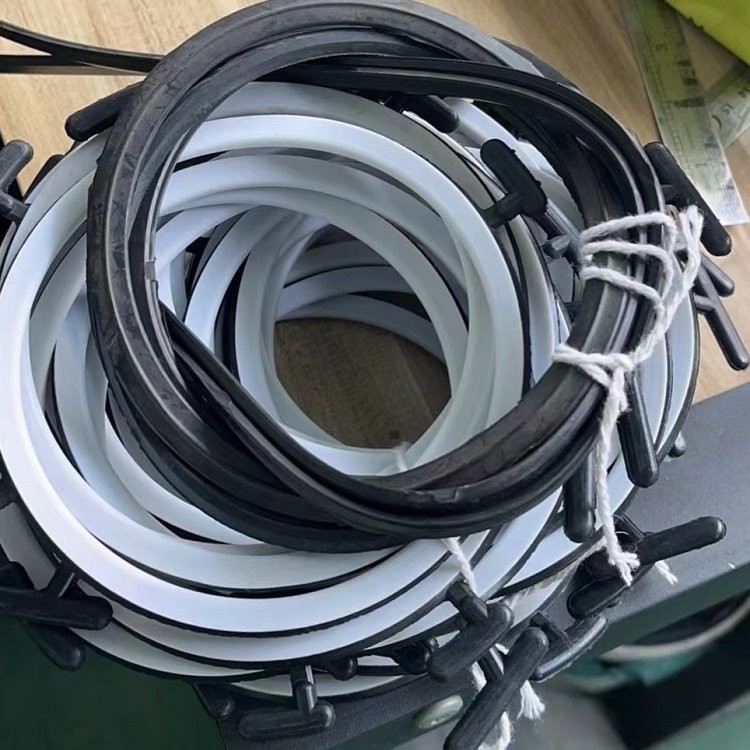

EPDM, or Ethylene Propylene Diene Monomer, is a type of synthetic rubber known for its excellent resistance to heat, ozone, and weathering. This makes it a popular choice for all sorts of applications, especially in Heat Exchanger Gasket and sealing jobs where durability and long - term performance are crucial.
Now, in practical terms, the relaxation modulus of EPDM rubber seals is super important. Imagine you're using an EPDM rubber seal in a heat exchanger. When the seal is first installed, it's under a certain amount of compression. This compression creates a force that keeps the seal in place and prevents leaks. But over time, the EPDM rubber will relax. If the relaxation modulus is high, it means the rubber will maintain its stress and sealing ability for a longer period.
Let me give you an example. Say you have two different EPDM rubber seals, Seal A and Seal B. Seal A has a higher relaxation modulus than Seal B. You install both seals in similar heat exchangers. After a few months, Seal A will still be exerting a relatively high amount of force to keep the seal tight, while Seal B might have lost a significant amount of its initial stress. This could lead to leaks in the heat exchanger with Seal B, which is clearly not a good thing.
The relaxation modulus of EPDM rubber seals is affected by several factors. One of the main factors is temperature. As the temperature goes up, the relaxation process speeds up. EPDM rubber has a good temperature resistance range, but extreme heat can still have a negative impact on its relaxation modulus. For example, in a high - temperature industrial environment, the EPDM rubber seal might relax more quickly than in a cooler setting.
Another factor is the formulation of the EPDM rubber. Different manufacturers might use different additives and curing processes, which can change the relaxation modulus. Some additives can improve the rubber's resistance to relaxation, while others might have the opposite effect. That's why it's so important to work with a reliable supplier who knows how to formulate EPDM rubber to have the right properties.
As a supplier, I've seen firsthand the difference that a high - quality EPDM rubber seal with a good relaxation modulus can make. Our customers who use our Epdm Rubber Seal in their heat exchangers often report fewer leaks and longer service life. This not only saves them money on repairs and replacements but also reduces downtime in their operations, which is a huge plus.
Now, you might be wondering how our EPDM rubber seals stack up against other types of gaskets, like NBR Gasket. NBR, or Nitrile Butadiene Rubber, is another common material for gaskets. While NBR has its own advantages, such as good oil resistance, EPDM generally has a better relaxation modulus in applications where heat and weathering are factors. This means that in many cases, our EPDM rubber seals will provide a more reliable and long - lasting seal.
We've spent a lot of time researching and developing our EPDM rubber formulations to optimize the relaxation modulus. We use state - of - the - art testing equipment to measure and ensure that our seals meet the highest standards. This way, we can guarantee that our customers are getting the best possible product for their needs.
If you're in the market for a reliable Epdm Rubber Seal, I encourage you to get in touch with us. Whether you're in the manufacturing, automotive, or any other industry that requires high - quality sealing solutions, we have the expertise and products to meet your requirements. Our team is always ready to answer your questions, provide technical support, and help you find the right seal for your application.
In conclusion, understanding the relaxation modulus of EPDM rubber seals is crucial for anyone who uses these products. It affects the performance and longevity of the seals, and ultimately, the efficiency and reliability of your equipment. As a trusted supplier, we're committed to providing you with EPDM rubber seals that have excellent relaxation modulus properties, ensuring that your operations run smoothly for years to come. So, don't hesitate to reach out and start a conversation about your sealing needs.
References
- Materials Science of Polymers for Engineers, Third Edition by Donald R. Paul and Christopher B. Bucknall
- Rubber Technology: Compounding, Testing, and Applications by Michael Morton