

In the realm of industrial heat transfer, plate - shell type heat exchangers have emerged as a crucial component due to their high efficiency, compact design, and ability to handle a wide range of operating conditions. As a Plate - shell Type heat exchanger supplier, I understand the importance of accurately simulating these complex systems to optimize their performance and ensure cost - effective operation. In this blog post, I will explore the various software tools available for simulating plate - shell type heat exchangers.
Importance of Simulation in Plate - Shell Type Heat Exchangers
Before delving into the software tools, it's essential to understand why simulation is so vital for plate - shell type heat exchangers. These heat exchangers are often used in demanding applications such as chemical processing, power generation, and refrigeration. The design and operation of plate - shell heat exchangers involve complex fluid flow and heat transfer phenomena. Simulation allows engineers to predict the performance of the heat exchanger under different operating conditions, identify potential problems, and optimize the design before construction.
Available Software Tools
1. Aspen HYSYS
Aspen HYSYS is a well - known process simulation software widely used in the chemical and petrochemical industries. It offers a comprehensive set of tools for simulating heat exchangers, including plate - shell type. With Aspen HYSYS, engineers can model the thermal and hydraulic performance of the heat exchanger. The software takes into account factors such as fluid properties, flow rates, and temperature profiles. It also provides detailed information about pressure drops, heat transfer coefficients, and overall heat transfer rates.
One of the advantages of using Aspen HYSYS is its ability to integrate with other process units in a plant. This allows for a holistic approach to process design, where the performance of the plate - shell heat exchanger can be evaluated in the context of the entire process. Additionally, Aspen HYSYS has a user - friendly interface, making it accessible to both experienced engineers and those new to process simulation.
2. ANSYS Fluent
ANSYS Fluent is a computational fluid dynamics (CFD) software that can be used to simulate the fluid flow and heat transfer in plate - shell type heat exchangers. CFD simulations provide a detailed understanding of the flow patterns and temperature distributions within the heat exchanger. ANSYS Fluent uses numerical methods to solve the governing equations of fluid flow and heat transfer, allowing for accurate predictions of the heat exchanger's performance.
The software can handle complex geometries and boundary conditions, which is particularly useful for plate - shell heat exchangers with intricate plate designs. ANSYS Fluent also offers a range of turbulence models, which can be selected based on the specific flow conditions in the heat exchanger. However, CFD simulations can be computationally expensive and time - consuming, requiring significant computational resources and expertise.
3. EDR (Exchanger Design and Rating)
EDR is a specialized software for heat exchanger design and rating. It is specifically tailored to the needs of heat exchanger engineers and designers. EDR allows users to design and rate plate - shell type heat exchangers based on industry standards and best practices. The software provides detailed calculations for heat transfer area, tube or plate dimensions, and pressure drops.
One of the key features of EDR is its ability to generate detailed reports, which can be used for documentation and quality control purposes. EDR also has a library of pre - defined heat exchanger configurations, which can be used as a starting point for the design process. This reduces the time and effort required to design a new plate - shell heat exchanger.
4. COMSOL Multiphysics
COMSOL Multiphysics is a multi - physics simulation software that can be used to simulate the coupled physical phenomena in plate - shell type heat exchangers. In addition to fluid flow and heat transfer, COMSOL Multiphysics can also model other physical processes such as chemical reactions, structural mechanics, and electromagnetic fields.
This multi - physics capability is particularly useful for applications where there are interactions between different physical processes. For example, in a chemical process, the heat transfer in the plate - shell heat exchanger may be affected by chemical reactions occurring in the fluid. COMSOL Multiphysics allows engineers to simulate these complex interactions and optimize the design of the heat exchanger accordingly.
Comparison of Software Tools
Each of the software tools mentioned above has its own strengths and weaknesses. Aspen HYSYS is ideal for process - level simulations, where the heat exchanger is integrated into a larger process. It provides a high - level overview of the heat exchanger's performance and is relatively easy to use. ANSYS Fluent, on the other hand, is more suitable for detailed CFD simulations, offering a deep understanding of the fluid flow and heat transfer phenomena within the heat exchanger. However, it requires more computational resources and expertise.
EDR is a specialized tool for heat exchanger design and rating, focusing on the detailed calculations required for the design process. It is well - suited for heat exchanger engineers who need to design and optimize the heat exchanger based on industry standards. COMSOL Multiphysics is the most versatile tool, capable of simulating multiple physical processes simultaneously. It is suitable for applications where there are complex interactions between different physical phenomena.
Our Offer as a Plate - shell Type Supplier
As a Plate - shell Type heat exchanger supplier, we have extensive experience in using these software tools to design and optimize our products. We understand that each application has unique requirements, and we use the appropriate software tool to ensure that our plate - shell heat exchangers meet the specific needs of our customers.
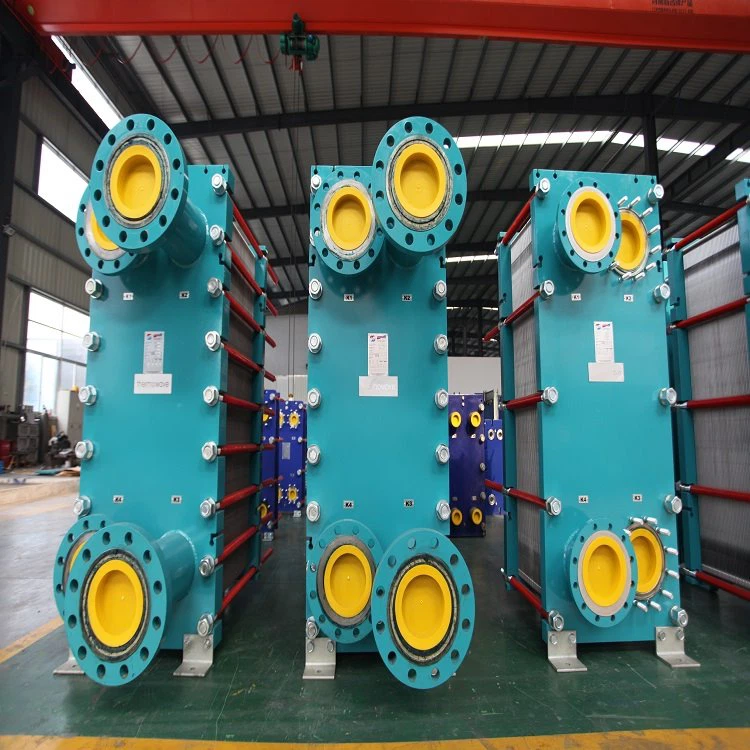
We offer a range of Plate - shell Type heat exchangers, which are designed using the latest simulation techniques. Our heat exchangers are known for their high efficiency, reliability, and durability. We also provide custom - design services, where we can work closely with our customers to develop a plate - shell heat exchanger that is tailored to their specific application.
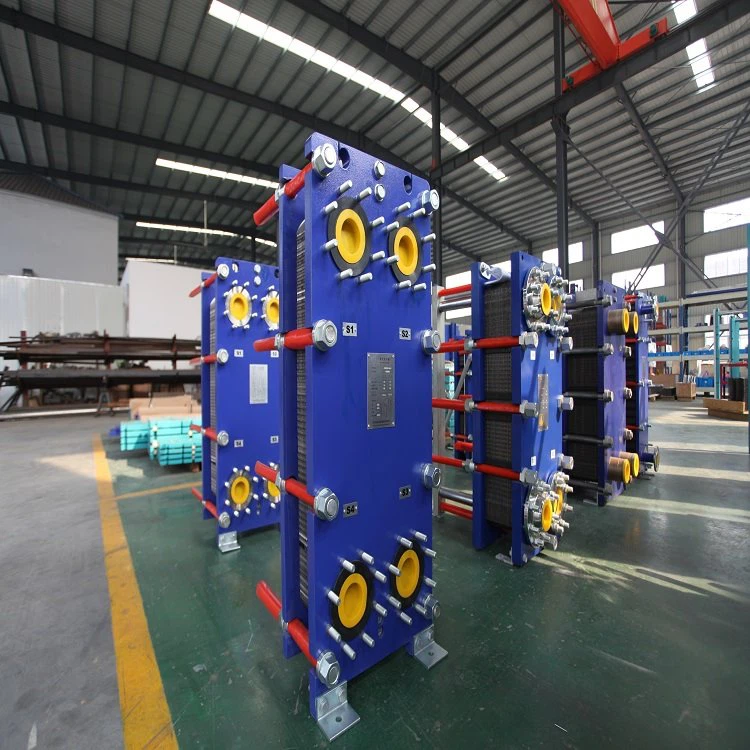
In addition to our Plate - shell Type heat exchangers, we also offer Plate - Frame Type heat exchangers. Our Plate - Frame Type heat exchangers are designed for applications where easy maintenance and cleaning are required.
Contact Us for Procurement and Consultation
If you are in the market for a plate - shell type heat exchanger or have any questions about heat exchanger simulation, we encourage you to contact us. Our team of experienced engineers is ready to assist you in selecting the right heat exchanger for your application and providing you with detailed information about the simulation process. We can also offer consultation services to help you optimize the performance of your heat exchanger and reduce operating costs.
References
- Incropera, F. P., & DeWitt, D. P. (2002). Fundamentals of Heat and Mass Transfer. John Wiley & Sons.
- Shah, R. K., & Sekulic, D. P. (2003). Fundamentals of Heat Exchanger Design. John Wiley & Sons.
- Versteeg, H. K., & Malalasekera, W. (2007). An Introduction to Computational Fluid Dynamics: The Finite Volume Method. Pearson Education.