

Hey there! As a supplier of Plate - shell Type heat exchangers, I often get asked about heat transfer coefficients in these nifty devices. So, let's dig deep and explore what they are, why they matter, and how they work in Plate - shell Type heat exchangers.
First off, what's a heat transfer coefficient? Well, it's a measure of how well heat can be transferred between two fluids separated by a solid surface, like the plates in our Plate - shell Type heat exchangers. In simpler terms, it tells us how fast heat can move from one fluid to the other. A high heat transfer coefficient means heat moves quickly, while a low one means it moves more slowly.
There are a few different types of heat transfer coefficients we need to talk about. The overall heat transfer coefficient, usually denoted as U, takes into account all the resistances to heat transfer in the heat exchanger. This includes the resistance on the hot - side fluid, the resistance of the plate material, and the resistance on the cold - side fluid. It's a really important value because it helps us figure out how much heat can be transferred in a given heat exchanger.
Let's break down the factors that affect the heat transfer coefficient in Plate - shell Type heat exchangers. One of the biggies is the flow rate of the fluids. When the flow rate is high, the fluid moves faster over the plates. This means there's more turbulence, and heat can be transferred more efficiently. Think of it like a river. If the water is flowing slowly, it doesn't pick up as much heat from the riverbed. But if it's flowing fast, it can carry that heat away more quickly.
The physical properties of the fluids also play a huge role. Things like thermal conductivity, viscosity, and density all matter. For example, a fluid with high thermal conductivity can transfer heat better. Water, for instance, has a relatively high thermal conductivity compared to some oils, so it's great for heat transfer applications.
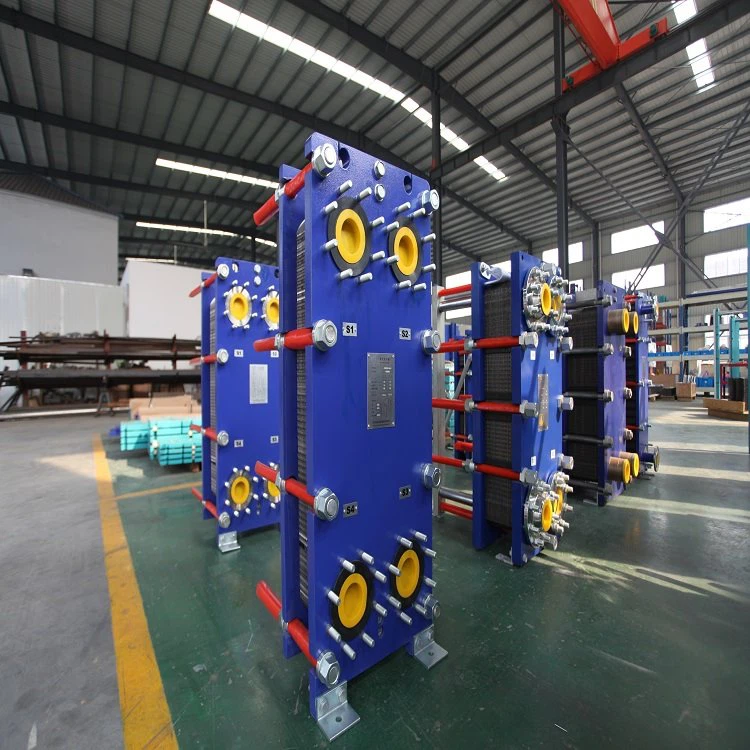
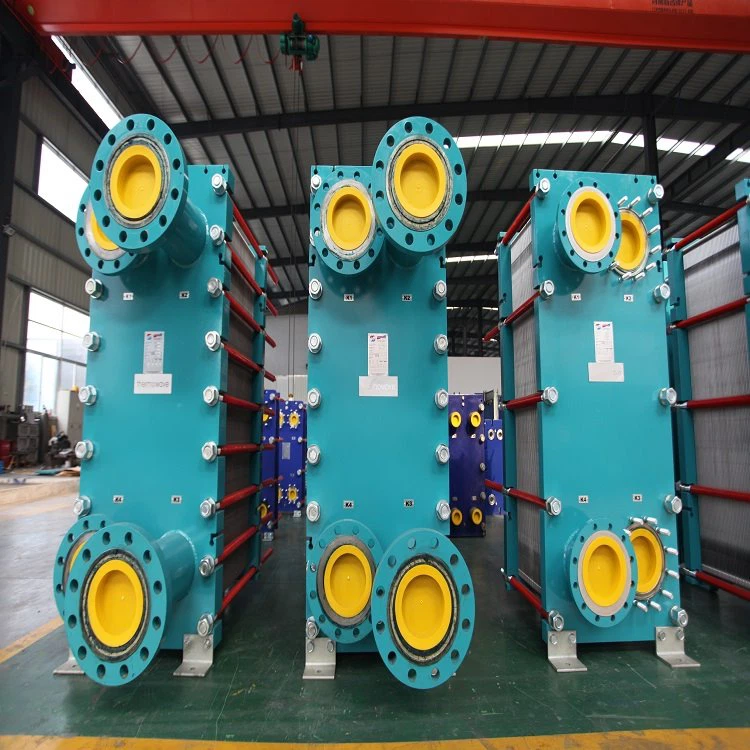
The design of the plates in the Plate - shell Type heat exchanger is another crucial factor. The shape, size, and surface area of the plates can all impact the heat transfer coefficient. Plates with a larger surface area provide more space for heat to be transferred. Some plates are also designed with special patterns or corrugations. These patterns create more turbulence in the fluid, which in turn increases the heat transfer coefficient.
Now, let's compare Plate - shell Type heat exchangers with Plate-Frame Type heat exchangers. While both are great for heat transfer, they have some differences in terms of heat transfer coefficients. Plate - shell Type heat exchangers often have a higher heat transfer coefficient because of their unique design. The shell around the plates helps to direct the flow of the fluids more effectively, and the plates themselves are usually welded together, which can reduce heat transfer resistance.
On the other hand, Plate - Frame Type heat exchangers use gaskets to seal the plates. While these gaskets are important for preventing leaks, they can add some resistance to heat transfer. So, in general, Plate - shell Type heat exchangers can transfer heat more efficiently.
As a supplier of Plate - shell Type heat exchangers, we put a lot of effort into optimizing the heat transfer coefficient of our products. We use advanced manufacturing techniques to create plates with the right shape and surface area. We also test different fluid flow rates and physical properties to make sure our heat exchangers perform at their best.
But why does all this matter to you? Well, if you're in the market for a heat exchanger, a high heat transfer coefficient means you can get more heat transfer done with a smaller heat exchanger. This can save you money on equipment costs, installation space, and energy consumption. For example, in an industrial process where you need to cool a large amount of fluid, a Plate - shell Type heat exchanger with a high heat transfer coefficient can do the job faster and more efficiently than a lower - performing one.
So, if you're thinking about purchasing a heat exchanger for your business, consider the heat transfer coefficient. And if you're interested in Plate - shell Type heat exchangers, we're here to help. We can provide you with detailed information about the heat transfer coefficients of our products, and we can work with you to find the best solution for your specific needs.
Whether you're in the chemical industry, food and beverage industry, or any other industry that requires heat transfer, our Plate - shell Type heat exchangers can offer you high - performance and cost - effective solutions. Don't hesitate to reach out if you want to learn more or start a procurement discussion. We're always happy to talk about how our heat exchangers can benefit your operations.
In conclusion, heat transfer coefficients are a key factor in the performance of Plate - shell Type heat exchangers. By understanding the factors that affect them and choosing the right heat exchanger, you can ensure efficient heat transfer and save money in the long run. So, if you're ready to take the next step in your heat transfer needs, let's start the conversation!
References:
- Incropera, F. P., & DeWitt, D. P. (2002). Fundamentals of Heat and Mass Transfer. Wiley.
- Kakac, S., & Liu, H. (2002). Heat Exchangers: Selection, Rating, and Thermal Design. CRC Press.