

The dynamic characteristics of plate - shell type heat exchangers are crucial aspects that determine their performance and suitability in various industrial applications. As a Plate - shell Type heat exchanger supplier, I am well - versed in these characteristics and will delve into them in this blog.
1. Heat Transfer Efficiency
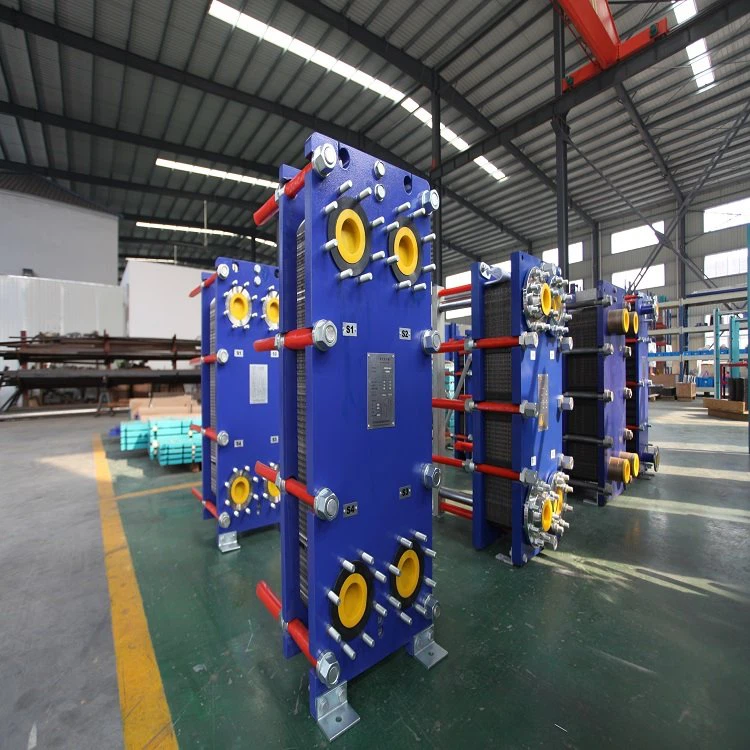
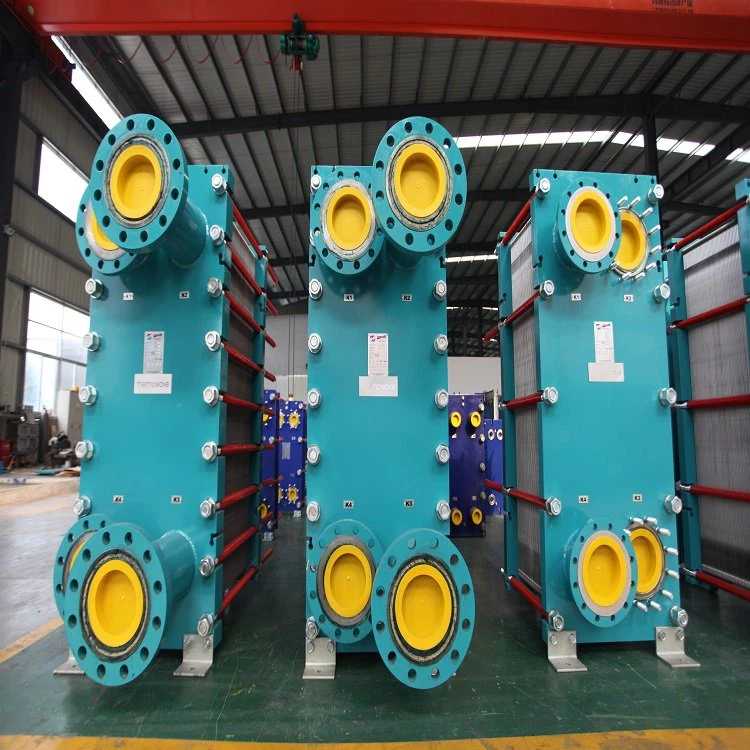
One of the most prominent dynamic characteristics of plate - shell type heat exchangers is their high heat transfer efficiency. The design of the plate - shell structure allows for a large surface area in a relatively compact volume. The plates are usually corrugated, which enhances fluid turbulence. Turbulent flow disrupts the boundary layer on the plate surface, reducing the thermal resistance and increasing the heat transfer coefficient.
For example, in a chemical process where a hot process fluid needs to transfer heat to a cold utility fluid, the high heat transfer efficiency of the plate - shell heat exchanger enables a more rapid and effective heat exchange. This means that less energy is wasted, and the overall process can operate more efficiently. Compared to other types of heat exchangers like the Plate - Frame Type, plate - shell heat exchangers often have a higher heat transfer rate per unit volume, making them an ideal choice for applications where space is limited.
2. Pressure Drop
The pressure drop across a heat exchanger is an important dynamic characteristic that affects the energy consumption of the system. In plate - shell type heat exchangers, the pressure drop is influenced by several factors, including the fluid flow rate, the plate geometry, and the fluid properties.
The corrugated plates in a plate - shell heat exchanger can cause an increase in pressure drop due to the enhanced turbulence. However, the design can be optimized to balance the heat transfer performance and the pressure drop. For instance, by adjusting the corrugation angle and pitch, engineers can control the flow pattern and reduce the pressure drop while still maintaining a high heat transfer rate. In some industrial applications, such as in a refrigeration system, minimizing the pressure drop is crucial to reduce the power consumption of the pumps or compressors.
3. Thermal Expansion and Contraction
Plate - shell type heat exchangers are often subjected to significant temperature variations during operation. Thermal expansion and contraction are important dynamic characteristics that need to be considered in the design and operation of these heat exchangers.
The materials used in the construction of the plates and the shell must have appropriate thermal expansion coefficients to avoid excessive stress and deformation. Special design features, such as expansion joints, can be incorporated to accommodate the thermal expansion and contraction. For example, in a power plant where the heat exchanger is used to cool the steam, the temperature difference between the inlet and outlet can be very large. Without proper consideration of thermal expansion, the heat exchanger may experience structural damage, leading to leaks and reduced performance.
4. Flow Distribution
Uniform flow distribution is essential for the efficient operation of plate - shell type heat exchangers. Non - uniform flow distribution can lead to hot spots and reduced heat transfer efficiency.
The inlet and outlet designs of the heat exchanger play a crucial role in ensuring uniform flow distribution. For example, the use of flow distributors can help to evenly distribute the fluid across the plates. Computational fluid dynamics (CFD) simulations are often used during the design process to optimize the flow distribution. In a food processing application, where precise temperature control is required, uniform flow distribution is necessary to ensure consistent product quality.
5. Fouling Resistance
Fouling is a common problem in heat exchangers, which can reduce the heat transfer efficiency and increase the pressure drop. Plate - shell type heat exchangers have certain characteristics that affect their fouling resistance.
The smooth surface of the plates and the high - velocity turbulent flow in a plate - shell heat exchanger can help to prevent the deposition of fouling materials. Additionally, the self - cleaning effect of the turbulent flow can remove any loosely attached fouling particles. However, in some applications where the fluid contains a high concentration of suspended solids or viscous substances, fouling may still occur. Regular maintenance and cleaning procedures are necessary to maintain the performance of the heat exchanger.
6. Response to Transient Conditions
In many industrial processes, heat exchangers need to respond to transient conditions, such as sudden changes in flow rate or temperature. Plate - shell type heat exchangers have a relatively fast response time compared to some other types of heat exchangers.
The compact design and the high heat transfer rate of plate - shell heat exchangers allow them to quickly adjust to changes in the operating conditions. For example, in a solar thermal power plant, where the solar radiation intensity can vary rapidly, the plate - shell heat exchanger can respond quickly to the changes in the heat input and maintain a stable output temperature.
7. Compatibility with Different Fluids
Plate - shell type heat exchangers are designed to be compatible with a wide range of fluids, including corrosive and high - viscosity fluids. The choice of materials for the plates and the shell is crucial to ensure the compatibility.
For corrosive fluids, materials such as stainless steel, titanium, or special alloys can be used. These materials have good corrosion resistance and can withstand the harsh chemical environment. In applications where high - viscosity fluids are involved, the plate design can be optimized to ensure proper flow and heat transfer. For example, in a heavy oil refining process, plate - shell heat exchangers can be designed to handle the high - viscosity oil and transfer heat efficiently.
8. Noise and Vibration
During operation, plate - shell type heat exchangers may generate noise and vibration, which can be a concern in some applications. The noise and vibration are mainly caused by the fluid flow and the mechanical forces within the heat exchanger.
The turbulent flow in the heat exchanger can cause fluid - induced vibration, while the mechanical forces from the pumps or compressors can also be transmitted to the heat exchanger. To reduce noise and vibration, proper support and damping systems can be installed. For example, in a hospital or a laboratory environment, where noise levels need to be kept low, the use of vibration - isolating mounts and acoustic enclosures can help to minimize the noise and vibration generated by the heat exchanger.
Contact for Purchase and Negotiation
If you are interested in our Plate - shell Type heat exchangers and would like to discuss your specific requirements, please feel free to contact us. We are committed to providing high - quality heat exchangers and excellent customer service. Our team of experts can work with you to find the best solution for your application.
References
- Incropera, F. P., & DeWitt, D. P. (2002). Fundamentals of Heat and Mass Transfer. Wiley.
- Shah, R. K., & Sekulic, D. P. (2003). Fundamentals of Heat Exchanger Design. Wiley.
- Kakac, S., & Liu, H. (2002). Heat Exchangers: Selection, Rating, and Thermal Design. CRC Press.