

Plate - shell type equipment, also known as plate - shell heat exchangers, are highly efficient thermal transfer devices that have found widespread applications in various industries. As a leading supplier of Plate - shell Type equipment, I am excited to share with you how these remarkable pieces of machinery work.
Basic Structure of Plate - shell Type Equipment
The fundamental structure of plate - shell type equipment consists of a series of corrugated plates that are welded together to form flow channels. These plates are usually made from high - quality materials such as stainless steel, titanium, or nickel alloys, depending on the specific application requirements. The welded plates are then enclosed within a shell, which provides additional support and protection.
The plates are designed with specific corrugation patterns. These patterns serve multiple purposes. Firstly, they increase the surface area available for heat transfer. A larger surface area allows for more efficient exchange of thermal energy between the two fluids flowing through the heat exchanger. Secondly, the corrugations create turbulence in the fluid flow. Turbulence disrupts the boundary layer of the fluid, which reduces the thermal resistance and enhances the heat transfer coefficient.
Fluid Flow Paths
In a plate - shell type heat exchanger, there are two main fluid flow paths: the hot fluid path and the cold fluid path. The hot fluid enters the heat exchanger through an inlet and flows through one set of channels formed by the welded plates. At the same time, the cold fluid enters through a separate inlet and flows through another set of channels.
The flow of the two fluids can be arranged in different configurations, such as counter - flow, parallel - flow, or cross - flow. In counter - flow configuration, the hot and cold fluids flow in opposite directions. This arrangement provides the maximum temperature difference along the length of the heat exchanger, resulting in the highest possible heat transfer efficiency. In parallel - flow configuration, the two fluids flow in the same direction, while in cross - flow configuration, they flow perpendicular to each other.
Heat Transfer Mechanism
The heat transfer in plate - shell type equipment occurs through conduction and convection. When the hot fluid flows through its channels, it transfers heat to the plates by convection. The heat then conducts through the thickness of the plates. On the other side of the plates, the cold fluid absorbs the heat from the plates through convection again.
The efficiency of heat transfer depends on several factors. The material of the plates plays a crucial role. Materials with high thermal conductivity, such as copper or aluminum (although not as commonly used in plate - shell heat exchangers due to other considerations like corrosion resistance), can transfer heat more effectively. The flow rate of the fluids also affects heat transfer. Higher flow rates generally increase the heat transfer coefficient, but they also increase the pressure drop across the heat exchanger.
Advantages of Plate - shell Type Equipment
One of the main advantages of plate - shell type equipment is its high heat transfer efficiency. Compared to traditional shell - and - tube heat exchangers, plate - shell heat exchangers can achieve a much higher heat transfer coefficient. This means that they can transfer the same amount of heat with a smaller surface area, resulting in a more compact design.
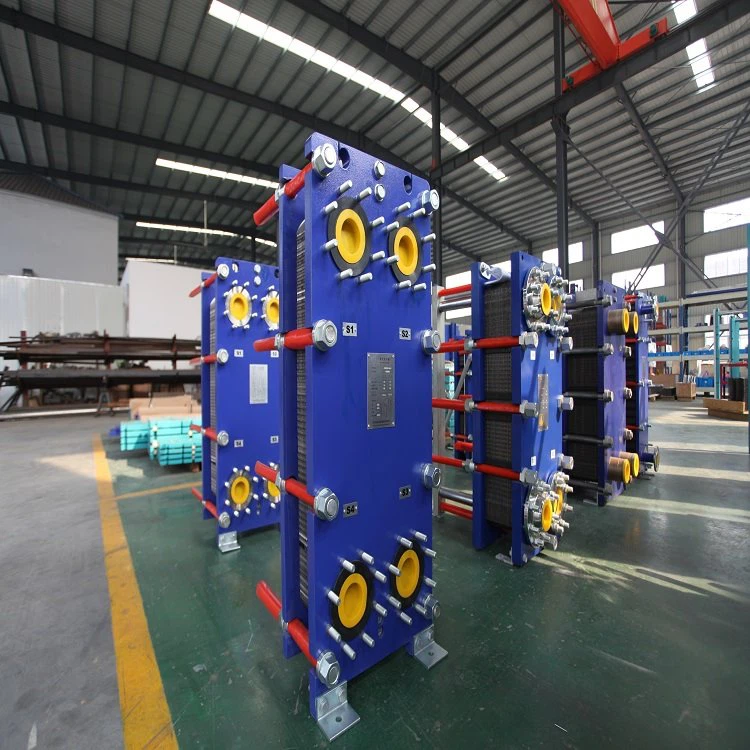
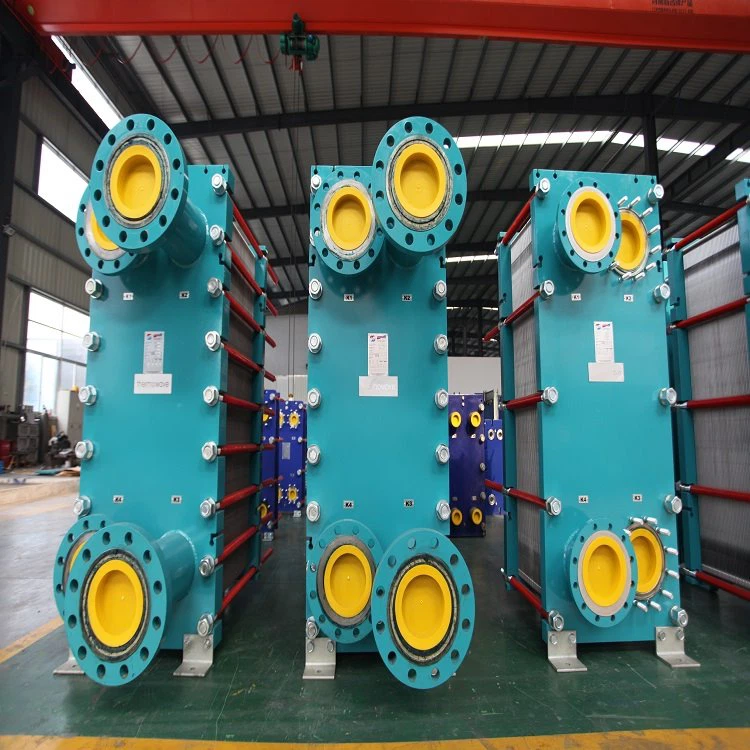
Another advantage is their excellent resistance to fouling. The corrugated plates create a turbulent flow that helps to prevent the deposition of dirt, scale, and other contaminants on the surface of the plates. This reduces the need for frequent cleaning and maintenance, which can save both time and money in the long run.
Plate - shell type equipment also offers good flexibility in terms of design. They can be easily customized to meet the specific requirements of different applications. For example, the number of plates, the size of the plates, and the corrugation pattern can all be adjusted according to the desired heat transfer capacity, pressure drop, and fluid characteristics.
Comparison with Plate - Frame Type
It is worth comparing plate - shell type equipment with Plate - Frame Type heat exchangers. Plate - frame heat exchangers consist of a series of plates that are held together by a frame and sealed with gaskets. While they are also efficient in heat transfer, they have some limitations.
Plate - frame heat exchangers are more prone to leakage due to the use of gaskets. The gaskets can degrade over time, especially in high - temperature or high - pressure applications, leading to fluid leakage. In contrast, plate - shell type equipment, which are fully welded, have a much lower risk of leakage.
The operating pressure and temperature ranges of plate - shell type equipment are generally higher than those of plate - frame heat exchangers. Plate - shell heat exchangers can withstand more extreme conditions, making them suitable for applications in the chemical, petrochemical, and power generation industries.
Applications of Plate - shell Type Equipment
Plate - shell type equipment have a wide range of applications. In the chemical industry, they are used for processes such as distillation, evaporation, and condensation. They can efficiently transfer heat between different chemical substances, helping to optimize the production process and improve product quality.
In the food and beverage industry, plate - shell heat exchangers are used for pasteurization, sterilization, and cooling processes. Their hygienic design and high - efficiency heat transfer make them ideal for ensuring the safety and quality of food and beverage products.
The power generation industry also benefits from plate - shell type equipment. They are used in power plants for heat recovery, such as pre - heating feedwater or cooling turbine condensers. By recovering waste heat, these heat exchangers can improve the overall efficiency of the power generation process and reduce energy consumption.
Maintenance and Troubleshooting
Proper maintenance is essential to ensure the long - term performance of plate - shell type equipment. Regular inspection of the heat exchanger is necessary to check for any signs of damage, such as cracks in the plates or leakage from the welded joints.
If a problem is detected, troubleshooting should be carried out promptly. For example, if there is a decrease in heat transfer efficiency, it could be due to fouling of the plates. In this case, cleaning the plates using appropriate cleaning agents can restore the heat transfer performance.
If there is a pressure drop across the heat exchanger that is higher than normal, it could be caused by blockages in the flow channels. Inspecting and removing any debris or deposits from the channels can help to reduce the pressure drop.
Conclusion
In conclusion, plate - shell type equipment are highly efficient and reliable thermal transfer devices. Their unique design, which combines the advantages of welded plates and a protective shell, allows for excellent heat transfer performance, high resistance to fouling, and the ability to operate under extreme conditions.
As a supplier of Plate - shell Type equipment, we are committed to providing high - quality products that meet the diverse needs of our customers. Whether you are in the chemical, food and beverage, or power generation industry, our plate - shell heat exchangers can offer you an effective solution for your heat transfer requirements.
If you are interested in learning more about our plate - shell type equipment or would like to discuss a potential purchase, we encourage you to contact us. Our team of experts is ready to assist you in finding the most suitable heat exchanger for your application.
References
- Incropera, F. P., & DeWitt, D. P. (2002). Fundamentals of Heat and Mass Transfer. Wiley.
- Shah, R. K., & Sekulic, D. P. (2003). Fundamentals of Heat Exchanger Design. Wiley - Interscience.