

Can plate - shell type heat exchangers be customized?
As a supplier of Plate - shell Type heat exchangers, I am frequently asked whether these heat exchangers can be customized. The answer is a resounding yes. Plate - shell type heat exchangers offer a high degree of customization, which makes them an ideal choice for a wide range of industrial applications.
Understanding Plate - shell Type Heat Exchangers
Before delving into the customization aspects, let's briefly understand what Plate - shell Type heat exchangers are. Plate - shell heat exchangers combine the advantages of plate heat exchangers and shell - and - tube heat exchangers. They consist of a series of welded plates that form flow channels for the hot and cold fluids. These plates are enclosed in a shell, providing a compact and efficient heat transfer solution. You can learn more about Plate - shell Type heat exchangers on our website.
Why Customization is Necessary
Different industries have diverse requirements when it comes to heat exchangers. For example, the chemical industry may need heat exchangers that can withstand highly corrosive substances, while the food and beverage industry requires equipment that meets strict hygiene standards. Customization allows us to tailor the heat exchangers to the specific needs of each client, ensuring optimal performance and efficiency.
Customization Options
Material Selection
One of the primary areas where customization is possible is in the choice of materials. The plates and shells of the heat exchanger can be made from a variety of materials, depending on the nature of the fluids being handled and the operating conditions. Common materials include stainless steel, titanium, and nickel alloys. Stainless steel is a popular choice due to its corrosion resistance and relatively low cost. Titanium is used in applications where high corrosion resistance is required, such as in the chemical and marine industries. Nickel alloys are suitable for high - temperature and high - pressure applications.
Design and Configuration
The design and configuration of the heat exchanger can also be customized. We can adjust the number of plates, the size of the plates, and the flow path to optimize the heat transfer efficiency. For example, in applications where a large heat transfer area is required, we can increase the number of plates or use larger plates. The flow path can be designed to ensure that the hot and cold fluids flow in a counter - current or parallel - flow arrangement, depending on the specific requirements.
Capacity and Performance
The capacity and performance of the heat exchanger can be customized to meet the specific heat transfer requirements of the application. We can calculate the required heat transfer rate based on the flow rates, temperatures, and properties of the hot and cold fluids. Then, we can design the heat exchanger to achieve the desired performance. This may involve adjusting the size of the heat exchanger, the number of passes, and the flow velocities.
Special Features
In addition to the basic customization options, we can also add special features to the heat exchanger. For example, we can install temperature and pressure sensors to monitor the operating conditions, or we can add insulation to reduce heat loss. We can also design the heat exchanger to be easily cleaned and maintained, which is important in industries where hygiene is a concern.
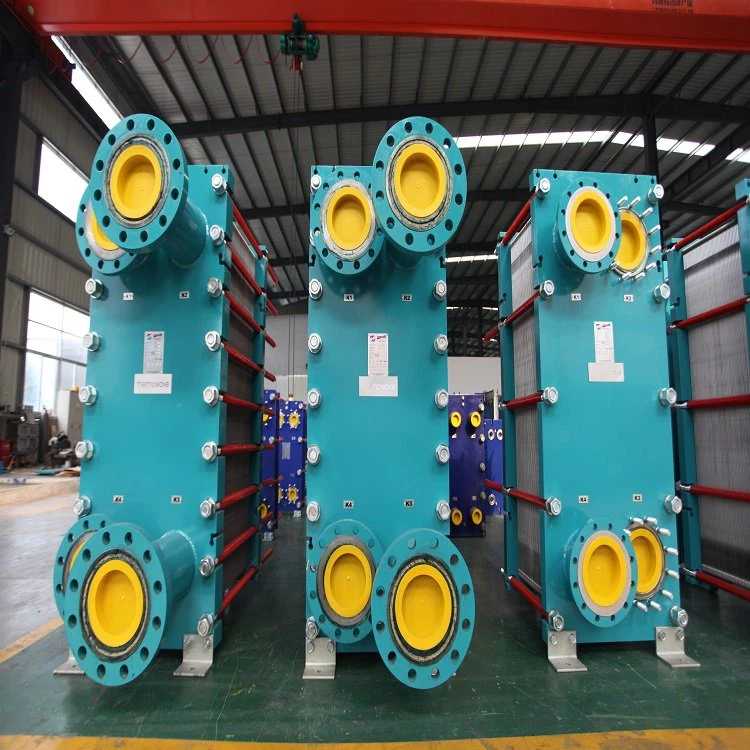
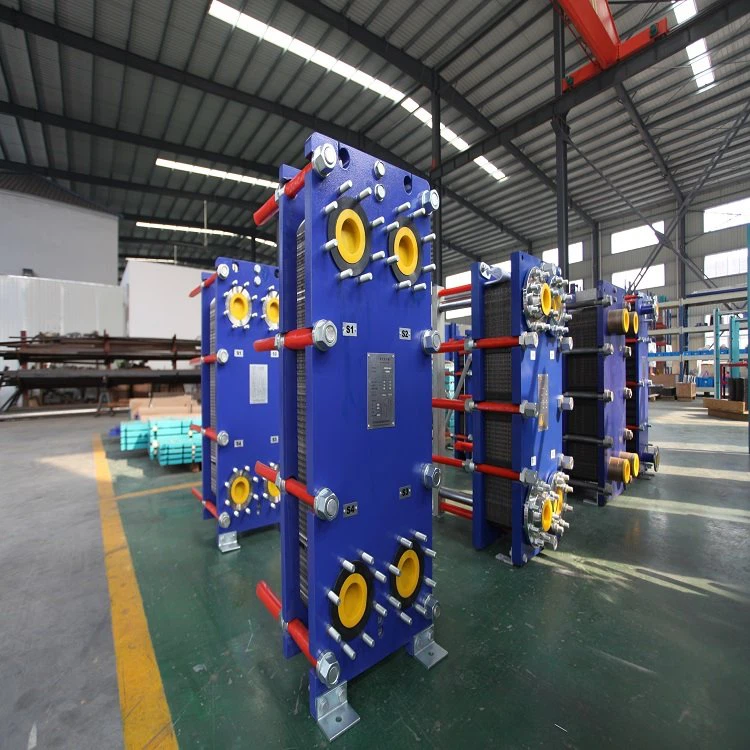
Comparison with Plate - Frame Type Heat Exchangers
It's worth comparing Plate - shell Type heat exchangers with Plate - Frame Type heat exchangers. Plate - frame type heat exchangers are also customizable, but they have some limitations. Plate - frame heat exchangers are typically assembled with gaskets, which can limit their use in high - temperature and high - pressure applications. Plate - shell type heat exchangers, on the other hand, are fully welded, which makes them more suitable for these demanding conditions. Additionally, Plate - shell type heat exchangers offer a higher heat transfer efficiency and a more compact design compared to Plate - Frame Type heat exchangers.
Case Studies
To illustrate the benefits of customization, let's look at a few case studies.
Chemical Industry
A chemical company needed a heat exchanger to handle a highly corrosive chemical solution. We customized a Plate - shell Type heat exchanger using titanium plates and a stainless - steel shell. The heat exchanger was designed to operate at high temperatures and pressures, and it was equipped with temperature and pressure sensors for monitoring. The customized heat exchanger has been operating successfully for several years, providing reliable and efficient heat transfer.
Food and Beverage Industry
A food and beverage company required a heat exchanger for pasteurization. We designed a Plate - shell Type heat exchanger that met the strict hygiene standards of the industry. The heat exchanger was made from stainless steel and was easy to clean and maintain. It was also designed to operate at a specific temperature and flow rate to ensure proper pasteurization of the product. The customized heat exchanger has helped the company improve the quality of its products and increase production efficiency.
The Customization Process
When a client approaches us for a customized Plate - shell Type heat exchanger, we follow a systematic process. First, we conduct a detailed consultation to understand the client's requirements. This includes gathering information about the fluids being handled, the operating conditions, and the specific performance requirements. Then, our engineering team uses advanced design software to create a customized design for the heat exchanger. We provide the client with detailed drawings and specifications for their review and approval. Once the design is approved, we proceed with the manufacturing process, using high - quality materials and state - of - the - art manufacturing techniques. Finally, we conduct rigorous testing to ensure that the heat exchanger meets the specified performance standards before delivering it to the client.
Conclusion
In conclusion, Plate - shell type heat exchangers can be customized to meet the specific needs of different industries and applications. Through material selection, design and configuration adjustments, capacity and performance optimization, and the addition of special features, we can provide tailored solutions that offer optimal performance and efficiency. If you are in need of a heat exchanger for your industrial application, I encourage you to contact us to discuss your requirements. Our team of experts will work with you to design and manufacture a customized Plate - shell Type heat exchanger that meets your exact specifications. We are committed to providing high - quality products and excellent customer service. Let's start the conversation today and find the perfect heat exchanger solution for your business.
References
- Incropera, F. P., & DeWitt, D. P. (2002). Fundamentals of Heat and Mass Transfer. John Wiley & Sons.
- Kakac, S., & Liu, H. (2002). Heat Exchangers: Selection, Rating, and Thermal Design. CRC Press.